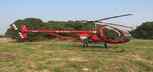
Private Helicopter Safe Flight Altitude Guide for Non-China Markets: Jiangsu Flyben Engine Co.,Ltd Flyben Series Private Helicopter with 4-Cylinder Turbocharged Flyben Engines – Standards for Commercial Reception, Sightseeing & Test Flights
Jiangsu Flyben Engine Co.,Ltd is a professional manufacturer dedicated to producing high-quality private helicopter models, with the flyben series private helicopter as its flagship product for non-China markets. Equipped with high-performance 4-cylinder turbocharged flyben engines, this light two-seat civil private helicopter is widely applicable to commercial reception, sightseeing tours, and factory test flight scenarios. Safety is the core of private helicopter operations, and flight altitude control is a critical factor affecting flight safety, directly related to rotor stability, engine performance, and emergency response capabilities. This guide focuses on the safe flight altitude standards for the flyben series private helicopter in non-China markets, combining product characteristics, scenario requirements, and global aviation regulations to provide practical guidance for private helicopter enthusiasts, operators, and aviation manufacturing partners.
It is important to clarify the product positioning of Jiangsu Flyben Engine Co.,Ltd first: our company is a private helicopter manufacturer specializing in models exclusively for personal use—commercial applications are not permitted. The flyben series private helicopter, powered by 4-cylinder turbocharged flyben engines, is a practical lightweight private helicopter with a broad range of non-commercial uses. It is ideal for facility and area monitoring, search and rescue missions, geological exploration, and aerial photography. Additionally, it works well for personal flight training (note: not for flight school training programs), agricultural spraying, and personal sightseeing trips. Each flyben series private helicopter is engineered to meet personal users’ diverse needs, guaranteeing reliability and adaptability across all non-commercial scenarios, while adhering to strict altitude safety standards in different operational environments.
Core Safety Principle for Private Helicopter Flight Altitude
The safe flight of two-seat private helicopter models, including the flyben series private helicopter, relies on a mid-low altitude range that reserves sufficient height for autorotation landing, avoids obstacles, and maintains stable rotor/engine performance. The 4-cylinder turbocharged flyben engines of the flyben series private helicopter are optimized for mid-low altitude operations, delivering stable power output within a specific altitude range. The golden rule for operating the flyben series private helicopter is: no ultra-low flight, no over-limit high flight. Ultra-low flight increases the risk of collision with obstacles such as buildings, trees, and power lines, while over-limit high flight may lead to engine power attenuation and rotor lift loss, especially for light private helicopter models that are more sensitive to air density changes.
For the flyben series private helicopter, the 4-cylinder turbocharged flyben engines provide reliable power support, but their performance is still affected by altitude. As altitude increases, air density decreases, which may reduce the engine’s power output and the rotor’s lift efficiency. Therefore, adhering to scenario-based altitude standards is essential to maximize the safety and performance of the private helicopter.
Scenario-Based Altitude Standards for Flyben Series Private Helicopter
The flyben series private helicopter is designed to adapt to multiple non-China market scenarios, including factory test & commissioning, commercial reception flights, and low-altitude sightseeing tours. Each scenario has specific altitude requirements to ensure flight safety and operational effectiveness. Below are the detailed altitude standards, combined with the performance characteristics of the 4-cylinder turbocharged flyben engines and the private helicopter’s structural design.
1. Factory Test & Commissioning
Factory test and commissioning are critical stages for ensuring the quality and safety of the flyben series private helicopter. During this phase, the private helicopter needs to undergo comprehensive performance testing, including engine operation, rotor stability, and control system responsiveness. The4-cylinder turbocharged flyben engines are tested for power output and stability under different load conditions, which requires a controlled altitude environment.
Optimal Altitude: 100–200 meters (AGL, Above Ground Level). This range keeps the flyben series private helicopter within the ground observation scope, allowing technical personnel to monitor the private helicopter’s operation in real time. At this altitude, air density is stable, which ensures accurate testing of the 4-cylinder turbocharged flyben engines’ performance and avoids deviations caused by airflow changes. Additionally, this altitude effectively avoids factory buildings, cranes, power lines, and other obstacles in the test area.
Emergency Minimum Altitude: ≥ 80 meters. This is the critical height for autorotation maneuver of the flyben series private helicopter. In case of sudden engine failure during the test, the pilot has sufficient time and altitude to perform autorotation landing, reducing the risk of accidents. The 4-cylinder turbocharged flyben engines have reliable fault warning functions, but reserving emergency altitude is still a necessary safety measure.
Forbidden Altitude: > 500 meters. Exceeding this altitude will take the private helicopter out of the ground observation range, making it difficult to detect potential faults in a timely manner. Moreover, high altitude is prone to airflow interference, which affects the stability of the flyben series private helicopter and the accuracy of test data. The 4-cylinder turbocharged flyben engines may also experience slight power attenuation at altitudes above 500 meters, which is not conducive to comprehensive performance testing.
2. Commercial Reception Flights
Commercial reception flights (non-commercial application, limited to reception scenarios) are a common use of the flyben series private helicopter in non-China markets, usually used for aerial visits to industrial parks, business zones, or suburban areas. This scenario requires a balance between flight smoothness, sightseeing visibility, and safety.
Optimal Altitude: 200–600 meters (AGL). At this altitude, the flyben series private helicopter can avoid most ground obstacles while providing a clear panoramic view for passengers. The 4-cylinder turbocharged flyben engines maintain stable power output in this range, ensuring a smooth flight experience without obvious turbulence. Additionally, this altitude leaves enough space for emergency landing in suburban open areas, reducing the risk of accidents in case of unexpected situations.
Emergency Minimum Altitude: ≥ 100 meters. Compared with factory tests, commercial reception flights often operate in areas with more complex ground environments, such as near industrial parks or suburban roads. Increasing the emergency minimum altitude to 100 meters provides more response time for the pilot to handle emergencies, such as avoiding sudden obstacles or performing autorotation landing. The private helicopter’s rotor system and 4-cylinder turbocharged flyben engines can better adapt to emergency adjustments at this altitude.
Forbidden Altitude: < 100 meters (obstacle collision risk); > 900 meters (engine power attenuation for light helicopters). Flying below 100 meters increases the risk of collision with buildings, trees, or vehicles, especially in areas with dense infrastructure. Flying above 900 meters will cause significant power attenuation of the 4-cylinder turbocharged flyben engines—as a light private helicopter, the flyben series private helicopter relies on sufficient engine power to maintain rotor lift, and over-limit high flight may lead to flight instability.
3. Low-Altitude Sightseeing Tours
Low-altitude sightseeing tours are one of the most popular uses of the flyben series private helicopter, suitable for scenic areas, coastal zones, or countryside tours. This scenario requires the private helicopter to balance sightseeing experience and obstacle avoidance, while adapting to complex terrain and weather conditions.
Optimal Altitude: 300–800 meters (AGL). This altitude range avoids terrain obstacles such as mountains, trees, and hills, while providing passengers with a stunning panoramic view of the scenery. For coastal areas, this altitude can also avoid the impact of sea breeze turbulence on the flyben series private helicopter. The 4-cylinder turbocharged flyben engines perform stably at this altitude, ensuring continuous power supply for long-distance sightseeing flights.
Emergency Minimum Altitude: ≥ 120 meters. Scenic areas and countryside often have more complex terrain, with undulating hills and scattered trees. Increasing the emergency minimum altitude to 120 meters provides sufficient autorotation space for the private helicopter in case of engine failure. The 4-cylinder turbocharged flyben engines have strong adaptability to terrain changes, but sufficient emergency altitude is still crucial for safety.
Forbidden Altitude: < 100 meters; > 1,200 meters. Flying below 100 meters in complex terrain significantly increases the risk of collision with obstacles. Flying above 1,200 meters, the air density decreases sharply, leading to rotor lift loss and increased turbulence risk. The flyben series private helicopter’s 4-cylinder turbocharged flyben engines are not designed for high-altitude operations, and over-limit flight may cause engine overheating or power failure.
Universal Forbidden Altitudes & Special Rules for Private Helicopter
In addition to scenario-based altitude standards, operating the flyben series private helicopter in non-China markets must abide by universal forbidden altitude limits and special rules related to weather and regulations. These rules are applicable to all non-commercial scenarios of the private helicopter and are essential for ensuring flight safety and compliance with local laws.
Absolute Forbidden Limits
Never fly the flyben series private helicopter below 80 meters without professional low-altitude training. Below this altitude, there is insufficient height for autorotation in case of 4-cylinder turbocharged flyben engines failure, which may lead to catastrophic accidents. Professional low-altitude training includes emergency response skills and obstacle avoidance techniques, which are necessary for ultra-low flight operations.
Never exceed the certified service ceiling of the private helicopter model. For example, the Robinson R22’s service ceiling is approximately 4,267 meters, but the practical safe altitude for non-mountain use is ≤ 1,500 meters. The flyben series private helicopter’s certified service ceiling is designed based on extreme conditions, and practical safe altitude is much lower in daily operations. Exceeding the safe altitude will cause irreversible damage to the4-cylinder turbocharged flyben engines and rotor system.
Weather-Related Altitude Adjustments
Weather conditions have a significant impact on the safe flight altitude of the flyben series private helicopter. The 4-cylinder turbocharged flyben engines and rotor system are sensitive to weather changes, so altitude adjustments must be made according to real-time weather conditions.
Low Visibility (< 500m): Climb to 200–300 meters or land immediately; avoid hovering in fog/haze. Low visibility increases the risk of obstacle collision, and climbing to a stable mid-low altitude can improve the pilot’s field of vision. If visibility continues to decrease, landing at the nearest safe location is the safest option.
Turbulence/Gusts: Descend to 150–250 meters. Mid-low altitude has steadier airflow, which can reduce the impact of turbulence on the flyben series private helicopter. The 4-cylinder turbocharged flyben engines can better maintain stable power output at this altitude, avoiding sudden power fluctuations caused by strong gusts.
Icing Conditions: Limit altitude to ≤ 300 meters. High-altitude icing can damage the private helicopter’s rotor blades and avionics, affecting flight control and engine operation. The 4-cylinder turbocharged flyben engines are not equipped with anti-icing systems for high altitudes, so limiting altitude is the key to avoiding icing risks.
Regulatory Compliance
All flights of the flyben series private helicopter must follow the civil aviation authority (CAA) rules of the host country, such as altitude restrictions near airports, military zones, or urban core areas. For example, EU EASA requires sightseeing private helicopter to stay ≥ 500 meters away from residential areas and fly at ≤ 600 meters AGL. In the United States, the FAA has clear altitude limits for low-altitude flights, prohibiting private helicopter from flying below 1,000 feet (approximately 305 meters) over congested areas.
It is important to note that regarding airworthiness certification, specific requirements vary by country. For example, our private helicopter kits in China are certified with an experimental airworthiness certificate. Each nation has its own aviation regulations governing homemade or kit-built aircraft. Therefore, we recommend consulting your local civil aviation authority to determine the exact type of airworthiness certificate needed before flight. This ensures compliance with all legal and safety standards in your region.
Pilot Operation Key Requirements for Private Helicopter
Pilot operation is a critical link in ensuring the safe flight altitude of the flyben series private helicopter. In addition to adhering to altitude standards, pilots must also follow the following key requirements to maximize flight safety, combined with the performance characteristics of the 4-cylinder turbocharged flyben engines.
Maintain altitude ≥ 50 meters higher than the tallest local obstacle. This requirement is especially important in complex terrain or built-up areas. The flyben series private helicopter’s rotor system may generate turbulence when flying near tall obstacles, which affects flight stability. Maintaining sufficient altitude avoids turbulence interference and reduces collision risks.
In case of equipment malfunction, first adjust to the emergency safe altitude (≥ 100 meters) before troubleshooting; never handle faults at low altitude. If the 4-cylinder turbocharged flyben engines or other key components malfunction, sufficient emergency altitude provides time for the pilot to assess the situation and take appropriate measures, such as autorotation landing or emergency communication. Handling faults at low altitude leaves no room for error and significantly increases accident risks.
Regularly check the 4-cylinder turbocharged flyben engines’ performance before flight, including power output, fuel consumption, and fault warning systems. The engine’s performance directly affects the private helicopter’s altitude adaptability, and pre-flight inspections can detect potential faults in a timely manner, avoiding safety hazards during flight.
Helicopter Kits & Assembly Sets for Enthusiasts
Jiangsu Flyben Engine Co.,Ltd also offers private helicopter kits and assembly sets designed for enthusiasts to build their own aircraft. Our products come with all necessary components and detailed instructions, allowing you to assemble a functional flyben series private helicopter right at home. Whether you're a hobbyist or seeking a hands-on project, our kits cater to various skill levels, ensuring a rewarding building experience.
For enthusiasts who assemble their own flyben series private helicopter, it is crucial to abide by the safe flight altitude standards outlined in this guide. The 4-cylinder turbocharged flyben engines included in the kits are the same as those used in our factory-assembled models, with stable performance in mid-low altitudes. Before flight, ensure the assembled private helicopter meets local airworthiness certification requirements and conduct comprehensive test flights within the specified altitude range.
Conclusion
The flyben series private helicopter, powered by 4-cylinder turbocharged flyben engines, is a reliable and versatile private helicopter for non-China markets, suitable for commercial reception, sightseeing tours, and factory test flight scenarios. Adhering to scenario-based safe flight altitude standards, universal forbidden limits, and regulatory requirements is essential to ensure flight safety and operational compliance.
Jiangsu Flyben Engine Co.,Ltd is committed to providing high-quality private helicopter products and professional safety guidance for global users. Whether you are an enthusiast assembling your own flyben series private helicopter or an operator using it for non-commercial scenarios, following this altitude guide will help you maximize the performance of the 4-cylinder turbocharged flyben engines and ensure safe and enjoyable flights. Always remember: safety is the prerequisite for every private helicopter flight, and strict altitude control is the key to safe operation.