
Previous
Next
the parameter of RX1E - A Two - Seat Electric Light Sport Aircraft: A Pioneer in Electric Aviation
- The RX1E - A two - seat electric light sport aircraft (e - LSA) stands as a remarkable feat in the realm of electric aviation. Conceived and designed under the esteemed guidance of academician Yang Fengtian, who is renowned as the chief designer of the J - 8II, this aircraft represents a significant stride forward in the pursuit of sustainable and advanced air travel. One of its most notable achievements is the realization of the localization of all core components. This not only underscores China's growing capabilities in aerospace innovation but also paves the way for a more self - reliant and cost - effective aviation industry.
Description
In short version
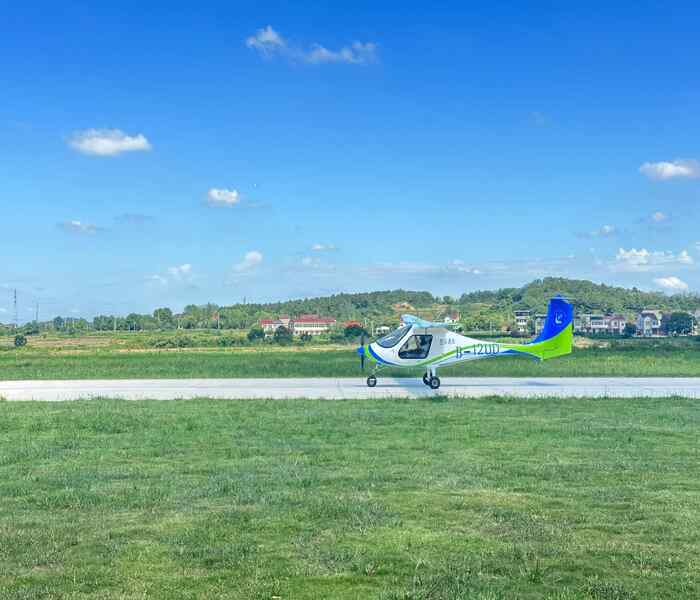
RX1E-A two-seat electric light sport aircraft (e-LSA) is designed under the guidance of academician Yang Fengtian, chief designer of J-8II, and realizes localization of all core components. RX1E-A has significantly increased its range and duration by enhancing the energy density of Li-ion batteries, improving the performance of the electric power system, and optimizing the structural designs. Having successfully completed its maiden flight in November 2017, RX1E-A obtained the Type Certificate (TC) in October 2018, and the Production Certificate (PC) in April 2019. It has now accumulated more than 20,000 flying hours, demonstrating excellent safety performance.
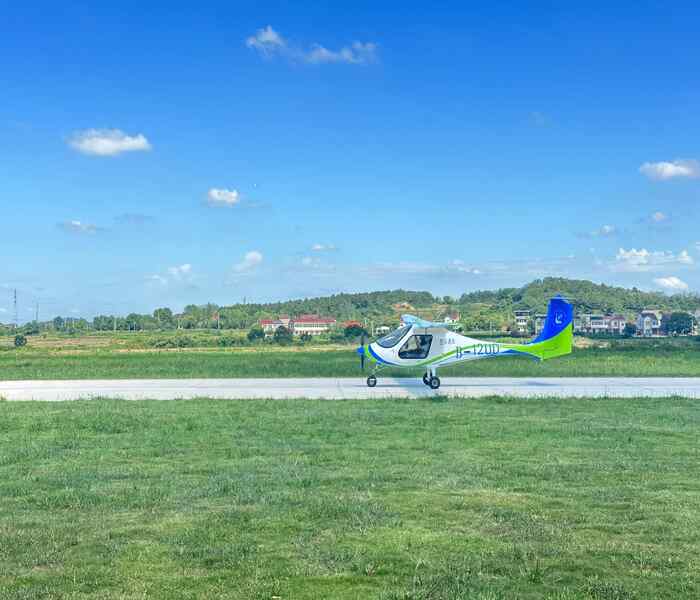
China's first independently developed electric light sport aircraft (e-LSA) boasts 100% localization of its core components, demonstrating unique intellectual property rights.
The first electric light sport aircraft to obtain both the Type Certificate (TC) and the Production Certificate (PC) issued by CAAC.
Five minutes of battery-switch can extend the flight endurance to 2.5 hours, offering a green, efficient, and safe flight experience with minimal supporting requirements.
Dimensions
· Length: 6.58m
· Height: 2.45m
· Wingspan: 14.50m
Weight
· Max takeoff weight: 630kg
· Payload: 2 people (Two seats)
· Battery weight: 165kg
Electric propulsion system
· Peak power: 50kW
· Rated power: 30kW
· Battery capacity: 34.56kWh
Performance
· Takeoff run distance: 281m
· Landing distance: 208m
· Max climb rate: 3.2m/s
· Stall speed: 83km/h
· Cruising speed: 120km/h
· Max duration: 2h30min
· Max range: 280km
· Optimized span - chord ratio: Significantly improves the aircraft's aerodynamic efficiency. It helps in reducing drag during flight, allowing for better lift - to - drag performance, which can enhance fuel (or in this case, electric power) efficiency and flight range.
· Efficient pneumatic design: Contributes to minimizing air resistance, enabling the aircraft to glide smoothly. This design likely helps in achieving higher speeds with less power consumption and also improves stability during takeoff, cruise, and landing phases.
· 5 - minute power - switching: A highly practical feature, especially for electric aircraft. It allows for rapid battery replacement, reducing downtime and making the aircraft more suitable for tasks that require quick turnarounds, such as short - haul flights, training missions, or aerial surveys.
These features collectively highlight the aircraft's focus on performance, efficiency, and operational convenience.
Long version
RX1E - A Two - Seat Electric Light Sport Aircraft: A Pioneer in Electric Aviation
I. Introduction to the RX1E - A
The RX1E - A two - seat electric light sport aircraft (e - LSA) stands as a remarkable feat in the realm of electric aviation. Conceived and designed under the esteemed guidance of academician Yang Fengtian, who is renowned as the chief designer of the J - 8II, this aircraft represents a significant stride forward in the pursuit of sustainable and advanced air travel. One of its most notable achievements is the realization of the localization of all core components. This not only underscores China's growing capabilities in aerospace innovation but also paves the way for a more self - reliant and cost - effective aviation industry.
II. Development and Certification Milestones
A. Maiden Flight and Early Days
In November 2017, the RX1E - A successfully completed its maiden flight, marking the beginning of a new chapter in electric light sport aviation. This initial flight was not just a symbolic event; it was the result of years of meticulous research, design, and development. The team behind the RX1E - A had painstakingly worked on every aspect, from the selection of materials to the design of the electric power system, to ensure that this first flight would be a success.
B. Type Certificate (TC) and Production Certificate (PC)
Following its successful maiden flight, the RX1E - A continued to make waves in the aviation industry. In October 2018, it obtained the Type Certificate (TC). This certificate is a testament to the aircraft's compliance with strict safety, design, and performance standards set by aviation authorities. It is a rigorous process that involves detailed inspections of the aircraft's design, construction, and overall airworthiness. The RX1E - A's ability to secure this certificate so soon after its maiden flight is a clear indication of its robust design and advanced technology.
Then, in April 2019, it achieved another significant milestone by obtaining the Production Certificate (PC). This certificate allows for the mass production of the RX1E - A, ensuring that this innovative electric aircraft can reach a wider audience, from aviation enthusiasts to commercial operators.
To date, the RX1E - A has accumulated more than 20,000 flying hours. This extensive flight experience is not just a number; it is a powerful demonstration of the aircraft's excellent safety performance. Every hour of flight has been a test of its reliability, and it has consistently proven itself to be a safe and dependable mode of transportation.
III. Core Component Localization and Intellectual Property
A. 100% Localization of Core Components
China's first independently developed electric light sport aircraft (e - LSA), the RX1E - A, boasts 100% localization of its core components. This is a significant achievement in the context of the global aerospace industry. In the past, many countries and companies have relied on international supply chains for key aerospace components, which can be vulnerable to disruptions and can also limit a country's ability to fully control and innovate in the aerospace sector.
By achieving 100% localization, the RX1E - A demonstrates unique intellectual property rights. The development of these core components involved extensive research and development efforts. Chinese engineers and scientists had to overcome numerous technical challenges, from developing advanced battery technologies to designing efficient electric propulsion systems. This localization not only ensures a more secure supply chain for the production of the RX1E - A but also serves as a foundation for further innovation in the domestic aerospace industry. It allows for quicker iterations and improvements to the aircraft's design, as there is direct control over all aspects of the component production.
B. Significance in the Chinese Aviation Landscape
The RX1E - A is also the first electric light sport aircraft to obtain both the Type Certificate (TC) and the Production Certificate (PC) issued by the Civil Aviation Administration of China (CAAC). This is a groundbreaking achievement that sets a new standard for electric aviation in the country. The CAAC's strict certification process ensures that any aircraft certified meets the highest safety and performance standards. For the RX1E - A to be the first electric light sport aircraft to achieve this dual certification is a clear indication of its superiority in terms of design, technology, and safety.
This achievement has far - reaching implications for the Chinese aviation industry. It encourages further investment and innovation in electric aviation technologies, as it shows that there is a viable path to certification and commercial success for electric aircraft. It also positions China as a leader in the development of electric light sport aircraft, potentially attracting international attention and partnerships in the future.
IV. Performance and Design Features
A. Electric Propulsion System and Battery
The RX1E - A is equipped with an advanced electric propulsion system. The peak power of this system reaches 50kW, while the rated power is 30kW. These power ratings are carefully chosen to balance performance and energy efficiency. The battery capacity of 34.56kWh is a crucial element in determining the aircraft's range and duration.
The aircraft has significantly increased its range and duration through a series of technological advancements. By enhancing the energy density of Li - ion batteries, the RX1E - A can store more electrical energy in a given volume, allowing for longer flights. Improving the performance of the electric power system also plays a vital role. This includes optimizing the motor efficiency, reducing energy losses in the power transmission, and ensuring that the system can operate at peak performance for extended periods. Additionally, optimizing the structural designs of the aircraft contributes to this improved range and duration. A more aerodynamic design, for example, reduces drag and thus requires less energy to maintain flight.
B. Dimensions and Weight
· Length: The RX1E - A has a length of 6.58m. This compact length makes it suitable for a variety of airfields, including smaller ones that may be more common in the context of light sport aviation. It also contributes to the aircraft's overall maneuverability, allowing it to navigate through the air with ease.
· Height: With a height of 2.45m, the aircraft has a relatively low profile. This can be advantageous in terms of storage and transportation, as it can fit into smaller hangars and may be easier to transport on the ground.
· Wingspan: The wingspan of 14.50m is a key factor in the aircraft's aerodynamic performance. A wider wingspan can provide more lift, which is essential for an electric aircraft that needs to balance the need for lift with energy efficiency.
In terms of weight:
· Max takeoff weight: The maximum takeoff weight of 630kg is carefully calculated to ensure that the aircraft can carry its payload while still maintaining safe flight characteristics. This weight limit also takes into account the structural integrity of the aircraft and the capabilities of its electric propulsion system.
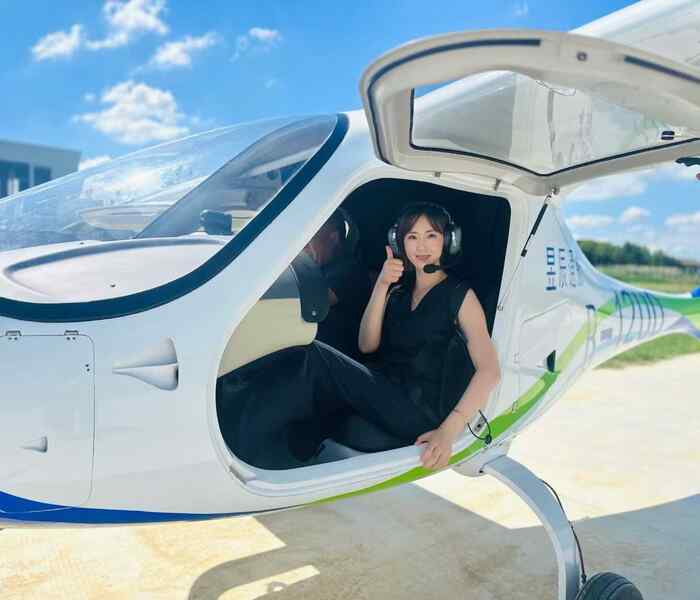
· Payload: The aircraft can carry 2 people (two seats), making it ideal for activities such as flight training, where an instructor and a student can be on board, or for small - scale tourism operations where two passengers can enjoy the view from above.
· Battery weight: The battery weight of 165kg is a significant portion of the overall weight of the aircraft. However, it is a necessary trade - off for the electric propulsion system, and ongoing research is likely focused on reducing this weight while increasing battery capacity.
C. Performance Metrics
Takeoff and Landing
· Takeoff run distance: The takeoff run distance of 281m is relatively short, which is beneficial for operations in areas where airfields may be limited in length. This short takeoff distance is achieved through a combination of the aircraft's lightweight design, efficient electric propulsion, and aerodynamic features.
· Landing distance: The landing distance of 208m is also compact, allowing the RX1E - A to land in smaller airfields or even in emergency situations where a shorter landing area may be the only option.
Climb and Speed
· Max climb rate: A max climb rate of 3.2m/s indicates the aircraft's ability to gain altitude quickly. This is important for various operations, such as avoiding obstacles during takeoff or reaching cruising altitudes efficiently.
· Stall speed: The stall speed of 83km/h is the minimum speed at which the aircraft can maintain level flight. Understanding this speed is crucial for pilots, as it helps them avoid stalling the aircraft during flight, especially during takeoff and landing phases.
· Cruising speed: With a cruising speed of 120km/h, the RX1E - A can travel at a reasonable pace, making it suitable for short - to - medium - range trips. This speed also balances the need for efficiency and the ability to reach destinations in a timely manner.
Range and Duration
· Max duration: The max duration of 2h30min allows for extended flights, which can be used for activities such as aerial surveys, where a longer time in the air is necessary to cover a large area, or for leisure flights where pilots and passengers can enjoy a more extended period of flying.
· Max range: The max range of 280km is a significant achievement for an electric light sport aircraft. This range opens up possibilities for various applications, from flight training circuits that can cover a larger area to small - scale tourism routes that can reach nearby attractions.
D. Aerodynamic and Design Innovations
Optimized Span - Chord Ratio
The optimized span - chord ratio of the RX1E - A significantly improves the aircraft's aerodynamic efficiency. The span - chord ratio is the ratio of the wingspan to the average chord length of the wing. By optimizing this ratio, the aircraft is able to reduce drag during flight. A lower drag means that the aircraft requires less energy to maintain its speed and altitude, which in turn enhances the efficiency of the electric power usage and extends the flight range.
This improved aerodynamic efficiency also leads to better lift - to - drag performance. A higher lift - to - drag ratio means that the aircraft can generate more lift for a given amount of drag, allowing it to fly more efficiently. This is particularly important for an electric aircraft, where every bit of energy efficiency counts towards extending the range and duration of the flight.
Efficient Pneumatic Design
The efficient pneumatic design of the RX1E - A contributes to minimizing air resistance. This design likely involves a combination of features, such as a smooth fuselage shape, optimized wing profiles, and possibly even advanced technologies like laminar flow control. By minimizing air resistance, the aircraft is able to glide smoothly through the air.
This smooth gliding not only reduces power consumption but also improves the overall stability of the aircraft during different phases of flight. During takeoff, a more stable aircraft is easier to control and can reach the desired takeoff speed more efficiently. During cruise, the reduced air resistance allows the aircraft to maintain its cruising speed with less power, conserving energy for a longer flight. And during landing, the improved stability helps ensure a smooth and safe touchdown.
5 - Minute Power - Switching
The 5 - minute power - switching feature is a highly practical and innovative aspect of the RX1E - A. For electric aircraft, downtime for battery charging or replacement can be a significant limitation. However, with this rapid battery replacement capability, the RX1E - A can minimize this downtime.
This feature is especially valuable for tasks that require quick turnarounds. In flight training, for example, where multiple flights may be conducted in a single day, the ability to quickly replace the battery means that the aircraft can be back in the air in a short time, maximizing the use of the aircraft and the training time for pilots. For aerial surveys, where time is of the essence to cover a large area, the 5 - minute power - switching allows for more frequent flights without long waits for battery charging.
V. Application Scenarios
A. Flight Training
The RX1E - A is an ideal aircraft for flight training. Its two - seat configuration allows for an instructor and a student pilot to be on board. The aircraft's relatively simple operation, combined with its safety features and efficient electric propulsion, makes it a great platform for teaching the basics of flight. The short takeoff and landing distances also mean that it can be used in smaller training airfields, providing more flexibility in training locations.
B. Low - Altitude Tourism
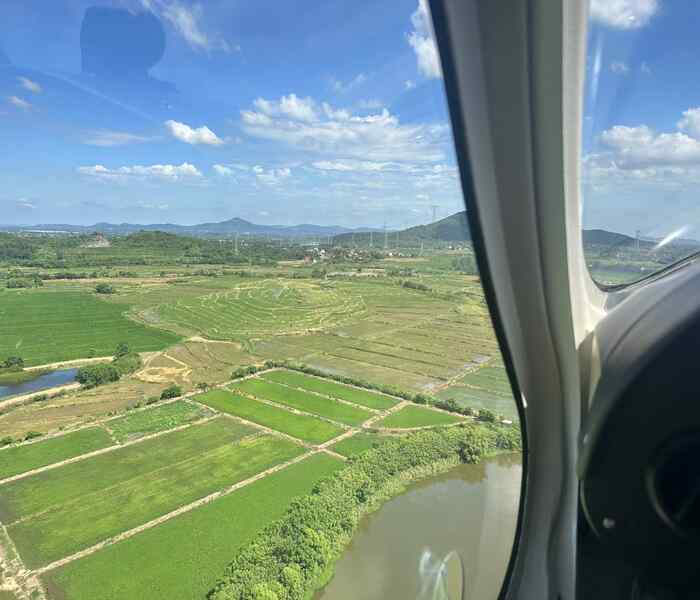
For low - altitude tourism, the RX1E - A offers a unique and environmentally friendly experience. Passengers can enjoy the scenery from above while knowing that the aircraft is producing zero emissions. The two - seat configuration is suitable for small groups or couples who want to take a scenic flight. The aircraft's cruising speed and range also allow for tours that can cover a reasonable area, taking in various attractions from the air.
C. Aerial Inspections
In the context of aerial inspections, the RX1E - A's features shine. The ability to stay in the air for up to 2h30min allows for extended inspection periods, which is useful for inspecting large areas such as power lines, pipelines, or agricultural fields. The 5 - minute power - switching feature ensures that if the battery runs low during an inspection, it can be quickly replaced, and the inspection can continue with minimal interruption. The aircraft's stability and efficient flight characteristics also make it suitable for capturing clear and detailed images or data during inspections.
VI. Conclusion
The RX1E - A two - seat electric light sport aircraft represents a significant achievement in electric aviation. From its development under the guidance of a renowned aerospace expert to its achievement of full core component localization and dual certification from the CAAC, it stands as a testament to China's capabilities in aerospace innovation.
Its performance metrics, including range, duration, speed, and takeoff/landing distances, make it suitable for a variety of applications, from flight training to low - altitude tourism and aerial inspections. The aerodynamic and design innovations, such as the optimized span - chord ratio, efficient pneumatic design, and 5 - minute power - switching, further enhance its appeal.
As the world moves towards more sustainable forms of transportation, the RX1E - A is at the forefront of the electric aviation revolution, showing that electric aircraft can be both efficient and practical for a range of real - world applications. It is likely that the success of the RX1E - A will inspire further innovation in the electric aviation sector, leading to even more advanced and capable electric aircraft in the future.