
Previous
Next
the parameter of RX1E-S The World’s First Pontoon-Type Two-Seat Electric Seaplane
- The RX1E-S is more than just an aircraft—it’s a symbol of innovation in sustainable aviation. As the world’s first certified pontoon-type two-seat electric seaplane, it proves that electric propulsion can meet the demands of practical, commercial flight, even in specialized water-based operations. With its combination of airworthiness, environmental friendliness, and economic efficiency, the RX1E-S is poised to redefine low-altitude aviation, offering operators a versatile, sustainable alternative to traditional seaplanes. Whether for training, tourism, or inspection, it represents a step forward in making aviation cleaner, quieter, and more accessible.
Description
short version
Product Introduction
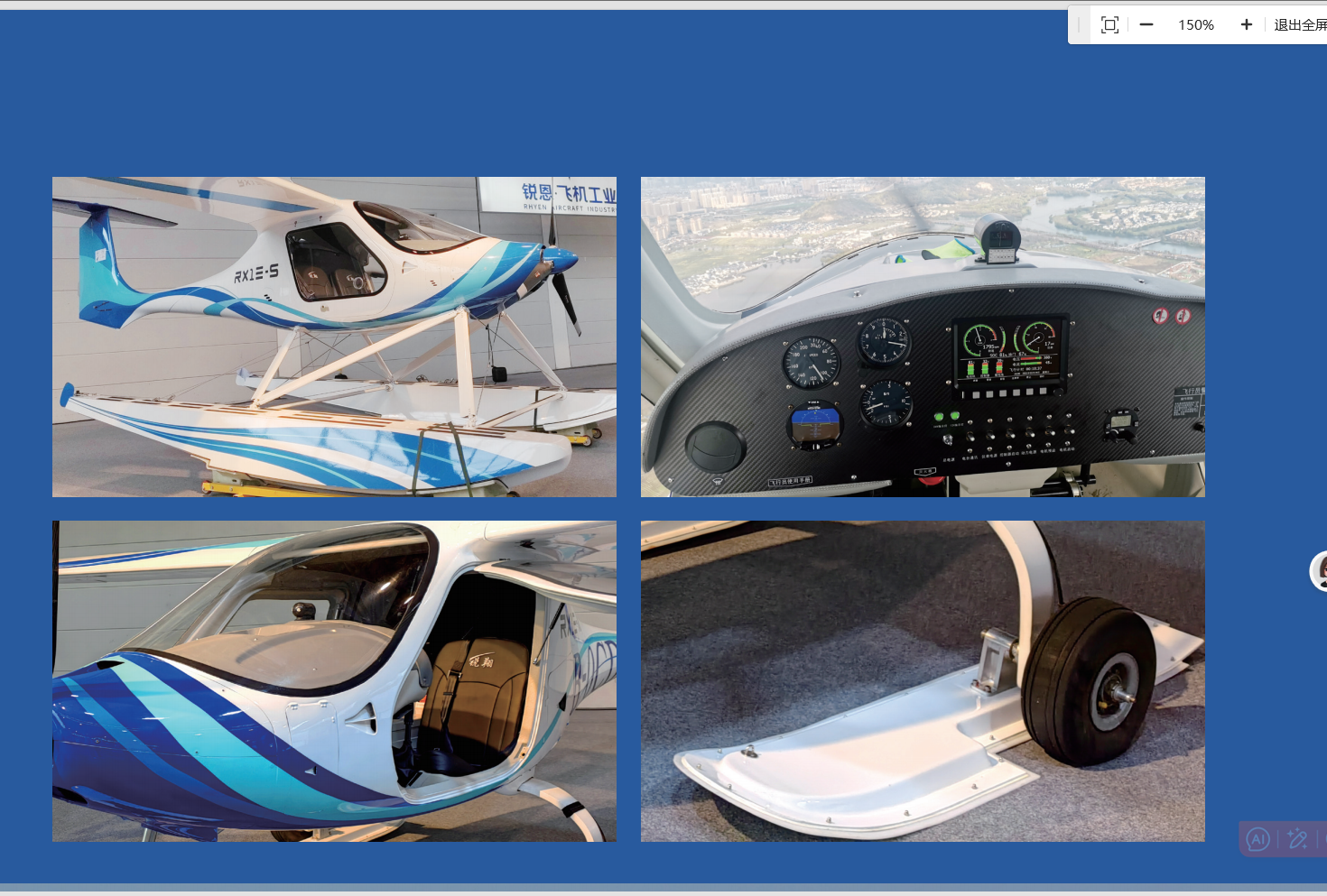
The RX1E-S is the world's first pontoon - type two - seat electric seaplane. It is developed based on the RX1E-A by improving the power of the electric power system and replacing it with a double - pontoon - type water landing gear.
The RX1E-S adopts a high - efficiency electric propulsion system and a double pontoon bracket - type water landing gear. It is equipped with a retractable rudder auxiliary control system, enabling flexible turning in narrow waters and dock docking adjustments. This electric seaplane completed its maiden flight on August 15, 2019, obtained the Type Certificate (TC) in December 2021, and the Production Certificate (PC) in December 2022.

Application scenarios include flight training, low - altitude tourism, and low - altitude inspections.
Product Parameters
1. Dimensions
Length: 6.78m
Height: 2.94m
Wingspan: 14.50m
2. Weight
Max takeoff weight: 650kg
Payload: 2 people
Battery weight: 165kg
3. Electric Propulsion System
Peak power: 80kW
Rated power: 60kW
Battery capacity: 34.56kWh
4. Performance
Takeoff run distance: 235m
Landing distance: 207m
Max climb rate: 4.5m/s
Stall speed: 82km/h
Cruising speed: 110km/h
Duration: 1h40min
Range: 150km
Product Strengths
1. Airworthiness: Having obtained the Type Certificate (TC) and Production Certificate (PC), it is qualified for commercial operation.
2. Environmentally friendly: It features zero emission and low noise, making it suitable for operation in scenic spots and ecological tourist areas with abundant water resources and high ecological protection standards.
3. Economic benefits: With low operating costs, safety and reliability, it is suitable for various water resources and can be used in multiple scenarios such as flight training, tourism, and low - altitude inspections.
Long version
RX1E-S: The World’s First Pontoon-Type Two-Seat Electric Seaplane – Innovation in Water-Based Aviation
In the rapidly evolving landscape of electric aviation, the RX1E-S stands out as a groundbreaking achievement: the world’s first pontoon-type two-seat electric seaplane. Developed based on its successful predecessor, the RX1E-A, this aircraft represents a leap forward in sustainable aviation, combining advanced electric propulsion technology with specialized water landing capabilities. More than just a feat of engineering, the RX1E-S has already secured key certifications, making it a viable option for commercial operations across multiple sectors. Let’s explore its design, performance, and potential to redefine low-altitude aviation.
Design & Development: Building on a Proven Foundation
The RX1E-S was born from the evolution of the RX1E-A, a well-regarded electric fixed-wing aircraft. To adapt to water-based operations, the development team focused on two critical upgrades: enhancing the electric power system and redesigning the landing gear. The original undercarriage was replaced with a double-pontoon bracket-type water landing gear—a robust, buoyant structure that allows the aircraft to take off from and land on calm water surfaces, such as lakes, reservoirs, or coastal bays. These pontoons are engineered for stability, ensuring the seaplane remains balanced during taxiing, takeoff, and landing, even in light waves.
Complementing the pontoon system is a high-efficiency electric propulsion system, upgraded from the RX1E-A to deliver more consistent power. This system includes a high-performance motor, a lithium battery pack optimized for energy density, and a sophisticated control unit that regulates power output to match flight conditions. The result is a seaplane that not only operates quietly but also maintains reliable performance across its flight envelope—from takeoff to cruising altitude.
Another key design feature is the retractable rudder auxiliary control system. This innovation enhances maneuverability in tight spaces: when navigating narrow waterways or adjusting position near docks, the retractable rudder provides precise control, allowing pilots to make small, accurate turns without relying solely on engine thrust. This makes the RX1E-S uniquely suited for operations in scenic areas with limited docking space, such as tourist lakes or coastal resorts.
Key Milestones: Certifications & Maiden Flight
The RX1E-S’s journey from concept to commercial readiness is marked by significant milestones. It completed its maiden flight on August 15, 2019—a successful test that validated its aerodynamic design, power system, and water landing capabilities. Over the following years, the seaplane underwent rigorous testing to meet international aviation safety standards, including thousands of flight hours, structural stress tests, and performance evaluations in various weather conditions.
In December 2021, the RX1E-S achieved a critical milestone: it was awarded a Type Certificate (TC) by aviation authorities, confirming that its design meets all safety and performance requirements for commercial use. This was followed in December 2022 by a Production Certificate (PC), which certifies that the manufacturing process is consistent, quality-controlled, and capable of producing aircraft that match the approved design. Together, these certifications position the RX1E-S as a fully certified, ready-to-deploy aircraft—rare for an electric seaplane, making it a trailblazer in the industry.
Product Parameters: Performance That Meets Practical Needs
The RX1E-S’s specifications are tailored to balance efficiency, versatility, and usability, making it suitable for both recreational and professional use:
Dimensions: With a length of 6.78m, height of 2.94m, and wingspan of 14.50m, the seaplane is compact enough to operate in small water areas while maintaining stable flight characteristics. Its wingspan provides sufficient lift for efficient cruising, even with the added weight of the pontoon system.
Weight: The maximum takeoff weight is 650kg, with a payload capacity of 2 people (pilot plus one passenger or cargo). The battery pack weighs 165kg—an acceptable trade-off for its energy capacity, which powers the seaplane for extended flights.
Electric Propulsion System: The system delivers a peak power of 80kW and a rated power of 60kW, ensuring strong acceleration during takeoff and steady performance at cruising speed. The 34.56kWh battery pack is designed for quick charging (compatible with standard aviation-grade chargers) and long cycle life, reducing operational downtime.
Performance: The seaplane requires a takeoff run distance of just 235m on water and a landing distance of 207m, making it suitable for small lakes or reservoirs. It boasts a maximum climb rate of 4.5m/s, a stall speed of 82km/h, and a cruising speed of 110km/h—ideal for low-altitude sightseeing or training. With a flight duration of 1 hour and 40 minutes and a range of 150km, it can cover typical tourist routes or training sessions without needing to refuel.
Product Strengths: Why the RX1E-S Stands Out
The RX1E-S’s appeal lies in its unique combination of airworthiness, sustainability, and economic viability—three strengths that set it apart in the aviation market:
Proven Airworthiness: Thanks to its TC and PC certifications, the RX1E-S is not just a prototype but a commercially viable aircraft. Operators can trust that it meets strict safety standards, reducing regulatory risks and ensuring compliance with aviation laws in most regions. This makes it a reliable choice for flight schools, tourism companies, and inspection services.
Environmental Friendliness: As an electric aircraft, the RX1E-S produces zero emissions—a critical advantage for operations in ecologically sensitive areas. Unlike traditional fuel-powered seaplanes, it does not release pollutants into water or air, making it suitable for national parks, nature reserves, or scenic lakes where environmental protection is a priority. Additionally, its low noise levels (far quieter than gasoline-powered aircraft) minimize disturbance to wildlife and local communities, enhancing its appeal for tourism applications.
Economic Benefits: The RX1E-S offers significant cost advantages over traditional seaplanes. Electric propulsion eliminates fuel costs, and its simplified mechanical system reduces maintenance needs—no oil changes, engine overhauls, or complex fuel system upkeep. This lowers long-term operational costs, making it accessible to smaller operators, such as local flight schools or tourism startups. Its versatility further boosts its value: it can seamlessly transition between flight training, low-altitude tourism (e.g., scenic lake tours), and aerial inspections (e.g., checking water quality or infrastructure along coastlines).
Application Scenarios: Versatility in Action
The RX1E-S’s design and capabilities make it suitable for a range of practical applications:
Flight Training: Its stable handling, slow stall speed, and simple controls make it an excellent training aircraft for pilots learning to fly seaplanes. The electric propulsion system also provides consistent power, reducing the learning curve for new pilots.
Low-Altitude Tourism: In scenic areas with water resources—such as mountain lakes, coastal bays, or river deltas—the RX1E-S offers a unique sightseeing experience. Passengers can enjoy quiet, emission-free flights with unobstructed views, while operators benefit from its low noise and environmental compatibility.
Low-Altitude Inspections: Its ability to take off from water and fly at low speeds makes it ideal for inspecting water-related infrastructure, such as dams, bridges, or coastal erosion sites. It can also be used for environmental monitoring, such as tracking algal blooms in lakes or surveying wildlife habitats.
Conclusion: A New Era for Electric Seaplanes
The RX1E-S is more than just an aircraft—it’s a symbol of innovation in sustainable aviation. As the world’s first certified pontoon-type two-seat electric seaplane, it proves that electric propulsion can meet the demands of practical, commercial flight, even in specialized water-based operations. With its combination of airworthiness, environmental friendliness, and economic efficiency, the RX1E-S is poised to redefine low-altitude aviation, offering operators a versatile, sustainable alternative to traditional seaplanes. Whether for training, tourism, or inspection, it represents a step forward in making aviation cleaner, quieter, and more accessible.