Previous
Next
Gyroplane Aircraft 9 Key Points for Overseas Buyers‑Factory Supply Gyroplane Kits Compliance,
- A gyroplane aircraft fits operators who want low-altitude flight capability without the purchase cost and complexity of a helicopter. Common buyers include flight schools and aviation clubs, sightseeing and tourism operators, government patrol teams, survey and mapping companies, farm and forestry managers, and private owners who fly sport or recreational missions. A purpose-built gyroplane aircraft keeps both purchase price and hourly operating cost below a comparable helicopter. Our two-seat layout works for dual instruction, back-seat observation, or a passenger-carrying tour operation. If your mission is aerial photography, patrol, inspection or private sport flying, this gyroplane aircraft is usually a practical starting point. If your operation requires continuous hover, heavy payload, or flight above 3,200 m, we will tell you honestly that a gyroplane aircraft may not match those requirements, and we can point you toward a more suitable platform instead.
Description
Gyroplane Aircraft Buying FAQ: Factory Direct Kits, Specs, Certification and Export
Quick guide for overseas buyers
This FAQ answers the questions we hear most often from international buyers looking for a reliable gyroplane aircraft at factory-direct terms. It covers purchase decisions, gyroplane kits selection, certificates, delivery, maintenance, pricing and export procedures.
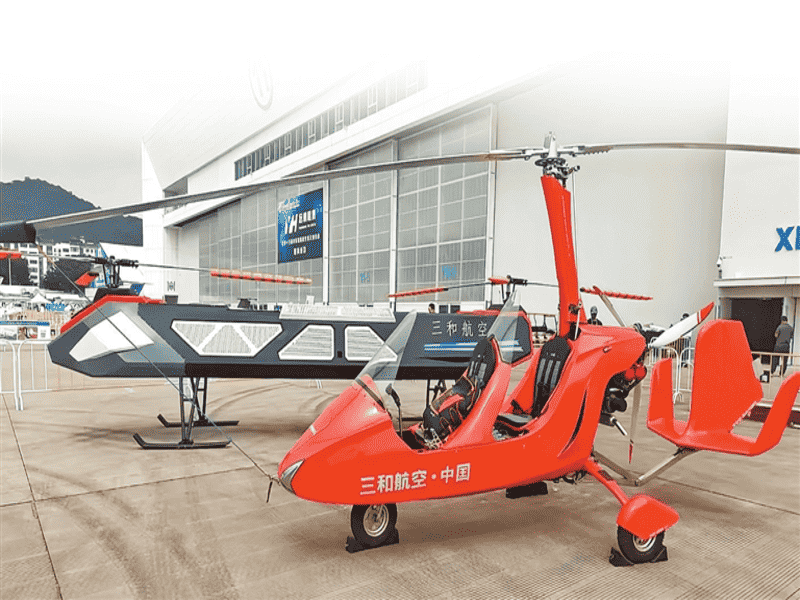
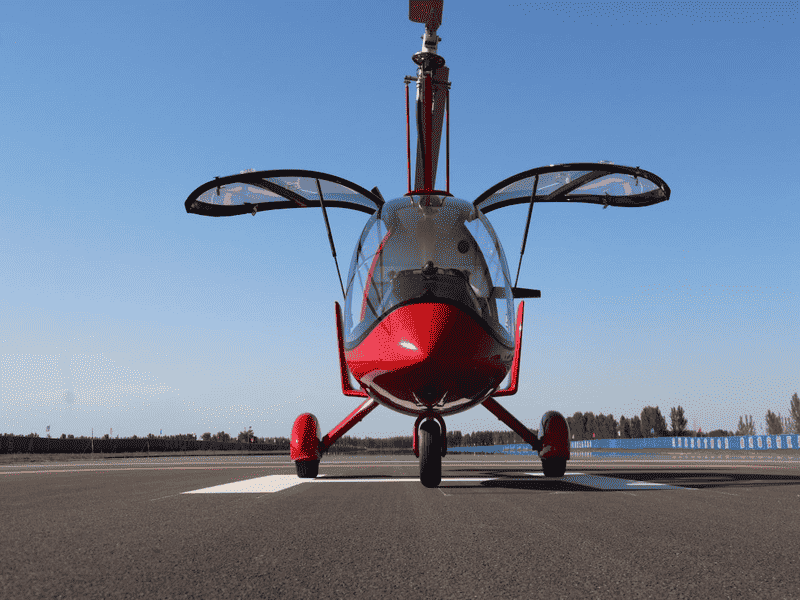
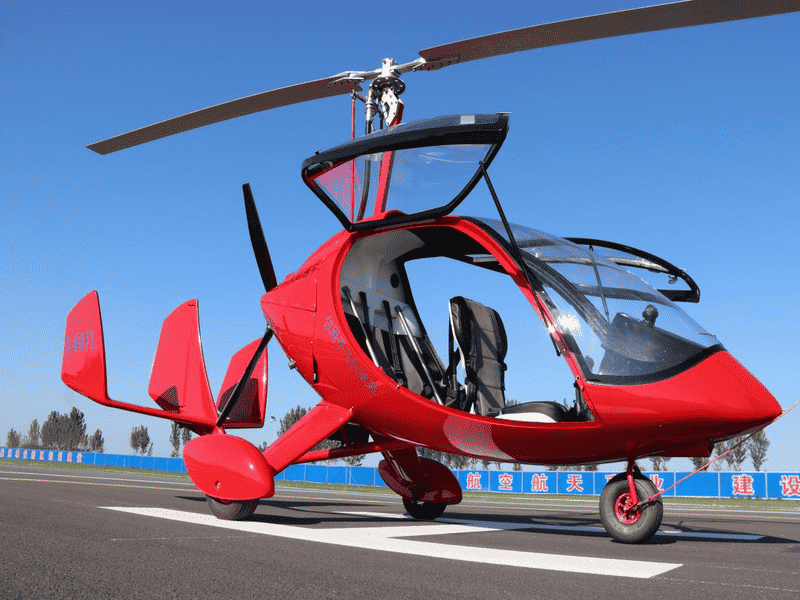
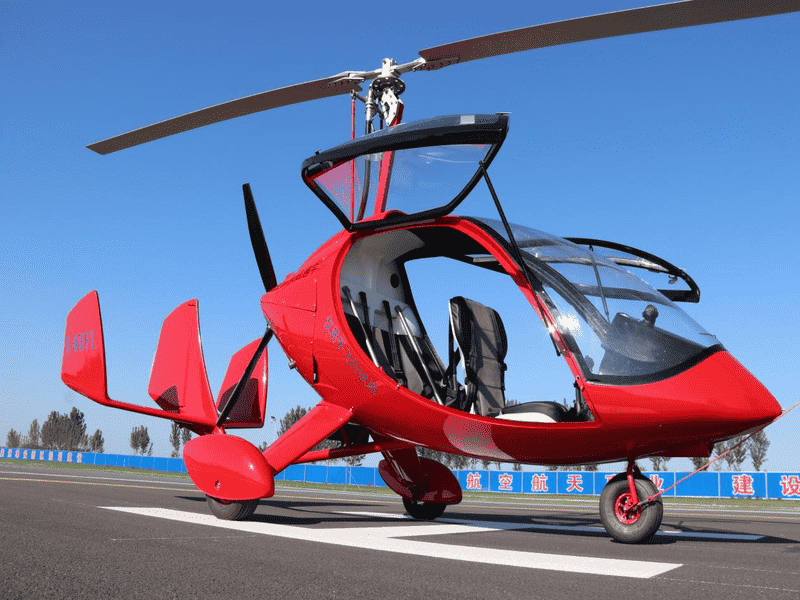
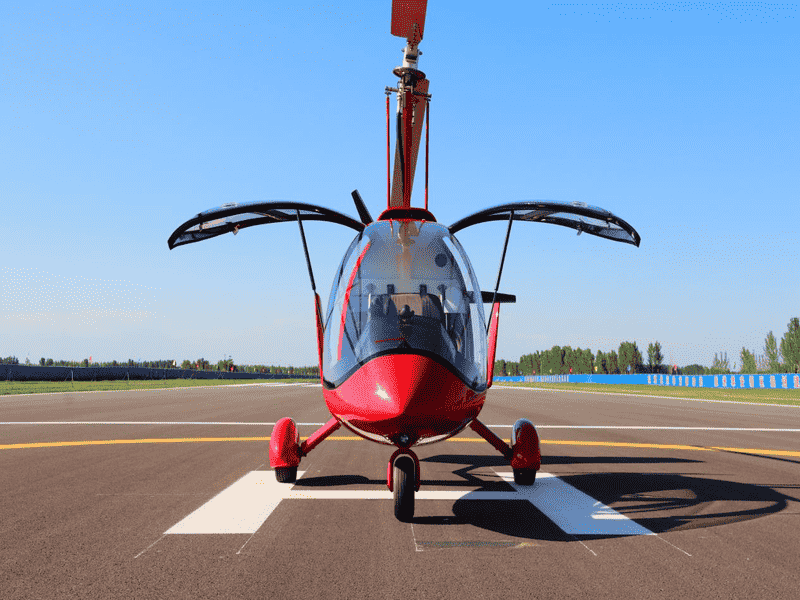
We are Hebei Tenchy Aviation Equipment Technology Co., Ltd., a light-aircraft manufacturer based in Gaobeidian, Hebei Province, China. Our J-RO C-100 is a two-seat enclosed gyroplane aircraft built around a Rotax 914UL engine, an 8.6-meter rotor and a carbon-fiber airframe. Our standard gyroplane kits pair this airframe with Rotax propulsion, a fitted panel and the accessory set described below. Units have been exported to more than 40 countries and regions.
You can visit our plant in person, or book a live video factory tour before you order. We sell direct as the original manufacturer, not through a trading company that resells on our behalf.
How this aircraft category works
A gyroplane aircraft, also called an autogyro, flies on a freely spinning main rotor. In forward flight, air flows up through the rotor disc and turns the blades in autorotation to produce lift. A separate rear propeller, driven by the piston engine, provides forward thrust. The main rotor is not engine-driven during normal flight.
This autogyro layout gives the category its core safety trait: if the engine stops in flight, the rotor keeps turning from the passing air, and the pilot can make a controlled gentle landing. That autorotation behavior is one reason the type suits low-altitude patrol, training and sightseeing missions.
J-RO C-100 core specifications
Item | Specification |
Seats | 2, tandem |
Length / width / height | 4.95 m / 1.9 m / 2.72 m |
Rotor diameter | 8.6 m |
Empty weight | 309 kg |
Useful load | 251 kg |
Maximum takeoff weight | 560 kg |
Range (single pilot) | 500–600 km |
Endurance (single pilot) | 4.5–5.5 h |
Service ceiling | 3,200 m |
Maximum speed | 180 km/h |
Cruise / range speed | 100 km/h / 130 km/h |
Takeoff roll | 80–120 m |
Landing roll | 0–30 m |
Fuel capacity | 70 L |
Fuel consumption | About 15 L/h |
Wind resistance | Level 8; crosswind 10.5 m/s, headwind 20 m/s |
Fuel type | Regular 95 / 98 unleaded gasoline |
Buying a Gyroplane Aircraft: Core Purchase FAQs
Who should buy a gyroplane aircraft from our factory?
A gyroplane aircraft fits operators who want low-altitude flight capability without the purchase cost and complexity of a helicopter. Common buyers include flight schools and aviation clubs, sightseeing and tourism operators, government patrol teams, survey and mapping companies, farm and forestry managers, and private owners who fly sport or recreational missions. A purpose-built gyroplane aircraft keeps both purchase price and hourly operating cost below a comparable helicopter.
Our two-seat layout works for dual instruction, back-seat observation, or a passenger-carrying tour operation. If your mission is aerial photography, patrol, inspection or private sport flying, this gyroplane aircraft is usually a practical starting point.
If your operation requires continuous hover, heavy payload, or flight above 3,200 m, we will tell you honestly that a gyroplane aircraft may not match those requirements, and we can point you toward a more suitable platform instead.
Is Tenchy the actual manufacturer, or a trading middleman?
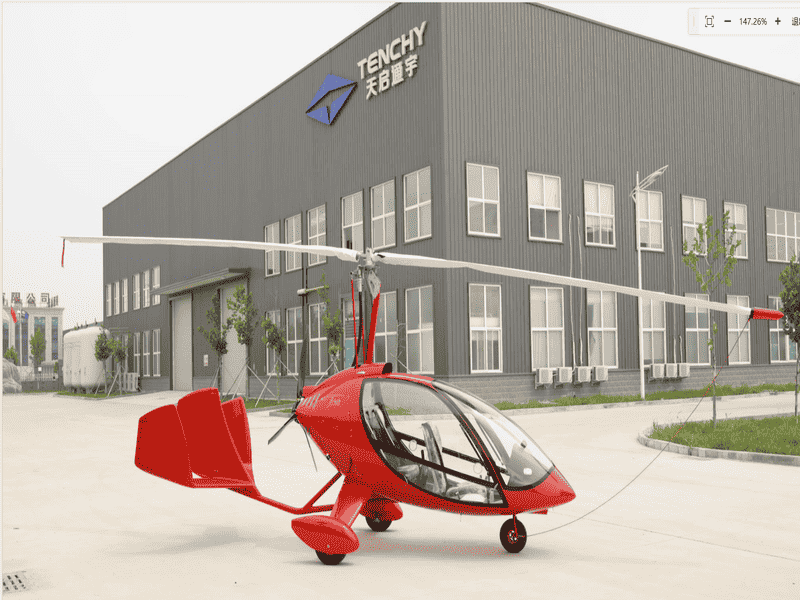
We are the manufacturer. Our plant occupies more than 100 mu of land with over 30,000 square meters of production and workshop space in Gaobeidian Economic Development Zone. We run our own composite lines, rotor and airframe assembly, testing and inspection processes.
When you buy direct, configuration changes go straight to the production team, spare parts come from the original source, and technical answers come from the people who built the airframe. You are not paying an intermediary margin between our shop floor and your delivery address.
We acquired the French aviation technology company DTA (Developments et Technologies Aero), absorbed its engineering know-how, completed localization, and now hold our own independent intellectual property. That technical lineage is part of what you are buying from us.
What real missions have our gyroplane aircraft been used for?
Over the past years our gyroplane aircraft has been deployed across several practical categories rather than demonstration-only flying.
Flight training and tourism: clubs and school operators use the gyroplane aircraft for dual instruction, experience flights, scenic rides and aviation education programs. The tandem seating and straightforward controls suit student progression.
Public and resource patrol: our autogyro has supported forest protection, farm inspection, wildlife monitoring, river patrol, power-line and pipeline inspection, and border or security patrol scenarios. Operators value the stable low-speed flight and short-field operation.
Survey and media: photography, mapping and observation crews mount cameras or pods on defined hardpoints, with airframe and electrical provisions discussed before production. Where confidentiality applies we do not publish customer names, but on request we can share general case references by region and mission type, plus factory test flight records for your unit.
How is a gyroplane aircraft different from a helicopter?
The main difference is how lift is produced. A helicopter drives its main rotor directly through the engine and transmission, which allows hover and vertical takeoff. A gyroplane aircraft lets its rotor spin freely in autorotation and uses the engine only for forward push through the rear propeller. On this autogyro the main rotor carries no engine drive shaft in normal flight.
That means the autogyro cannot hold a stationary hover like a helicopter, and it needs forward airspeed to keep the rotor lifting. What it gives back is a simpler mechanical structure, fewer complex transmission parts, lower purchase price, simpler maintenance and lower hourly running cost.
For missions that do not require hover, the comparison usually favors the gyroplane aircraft on budget and operating ease. For vertical lift work, the helicopter remains the correct choice, and we would not suggest our platform for that job.
Can I book a factory audit or a live video factory tour?
Yes. Both options are open to serious buyers.
A physical visit can be arranged in advance at our Gaobeidian facility. You can walk the composite workshop, assembly line, rotor balancing area, inspection bay and final test flight preparation zone, with our engineering and sales staff walking through the build process with you.
If travel is not practical, we can schedule a live video call through your preferred channel. You can watch the production floor in real time, inspect a unit under construction, review quality records and ask engineering questions on camera. A pre-booked tour is the normal step before contract signing for most international clients.
Can I order a single gyroplane aircraft, or only bulk batches?
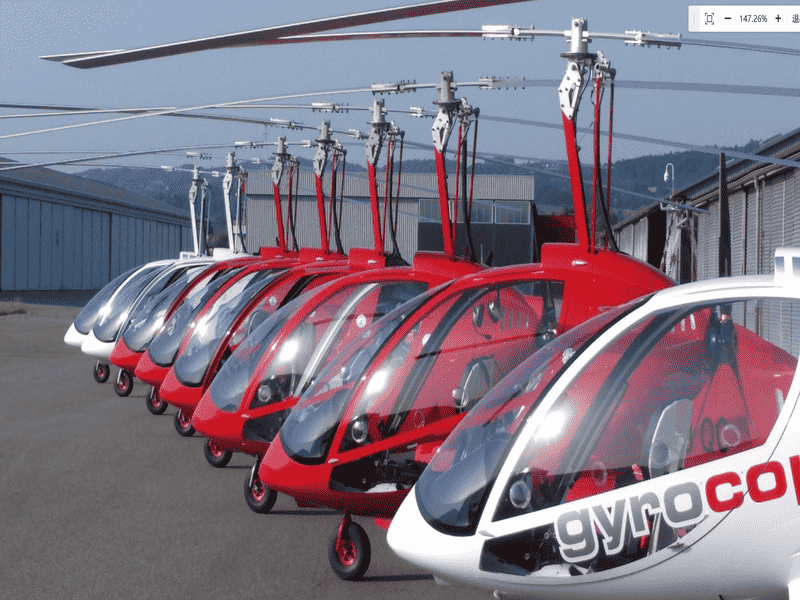
We accept both single-unit and multi-unit orders. A single gyroplane aircraft is common for private owners, small clubs and first-time operators who want to validate the platform before expanding. Each unit ships from our standard gyroplane kits with matched accessories and documentation.
Multi-unit orders suit flight schools, patrol agencies and tourism groups that need matched fleets. Batch orders follow the same production and inspection process, with serial-numbered records kept for each airframe, and we can align paint, equipment and spare parts lists across the order.
Gyroplane Kits and Configuration Selection FAQs
What is included in the standard gyroplane kits?
Our standard gyroplane kits cover a ready-to-fly two-seat gyroplane aircraft, not a bare airframe. The baseline package is built around the Rotax 914UL piston engine, a DUC FLASH2 three-blade composite propeller, and a 70 L fuel tank.
The airframe uses T300 carbon composite, aviation-grade aluminum landing gear, European-standard 25CD4 steel structural members, and an enclosed cabin with detachable gull-wing doors. The rotor system uses aluminum rotor blades, a rotor head and trim safety assembly.
Standard instrument fit includes engine gauges (tachometer, oil temperature and pressure, cylinder head temperature, fuel level), flight instruments (altimeter, airspeed, compass), rotor tachometer, hour meter, ignition key switch and a breaker-protected outlet with a reserved transponder position.
Controls include six-position adjustable rudder pedals and front-and-rear control sticks. The cabin has three-position adjustable seat backs, four-point harnesses, control dust covers and a heating system. Lighting includes landing and navigation lights. A 12.8 V 7500 mAh lithium iron phosphate battery, radio system and composite tail assembly complete the standard gyroplane kits.
A baseline care accessory set ships with each aircraft: fuselage, propeller, pitot tube, exhaust and rotor blade covers; propeller angle tool; rotor blade straightening kit; seat cushion spacer; electrical fuses; filler and drain hoses; wheel chocks; grease adapter; drain cup; 5 L measuring jug; bolt and nut kit; two spare drive belts; water-based extinguisher; and first-aid kit.
Are gyroplane kits delivered ready to fly or as assembly packages?
The delivered gyroplane aircraft, an enclosed two-seat autogyro, is assembled and test flown at our factory before handover. The gyroplane kits you receive include the complete airframe, propulsion, rotor, instruments, controls and the care accessory set listed above.
For container shipping, rotor blades and propeller may be detached to protect them in transit, then reinstalled under our technician support after arrival. The included straightening kit and angle tooling cover this reassembly step.
If your local rules prefer a builder-assembled or experimental registration route, tell us the category in advance. We can discuss what level of supply our gyroplane kits can match to that registration model, rather than assuming a ready-to-fly delivery fits every country.
Which optional gyroplane kits are most worth adding?
Most buyers start with the baseline gyroplane kits and configure the gyroplane aircraft around their own mission, rather than over-specifying from the start.
The ADS-B transponder, installed, is commonly requested by operators who fly in controlled or busy airspace. The Garmin 660 GPS navigation unit is a frequent add for cross-country tour and patrol routes. The Icom IC-A25A handheld radio and David Clark headsets (two sets) support clear cockpit communication.
Lower-cost but useful additions include a fuel filtering funnel, a split suction sunshade, an optional vertical speed indicator, a UV-resistant full aircraft cover and a manual grease gun. We list each option with its catalog price so the configuration decision stays transparent.
Which options are worth it depends on your flight rules and mission: schools may prioritize headsets, patrol operators navigation and transponder gear, and private owners the cover set only.
What is the standard rotor and propulsion setup?
The rotor disc measures 8.6 meters in diameter, matched to the aluminum rotor head and trim safety assembly. Autorotation keeps the blades spinning in this autogyro in flight, and pre-rotation on the ground helps bring the rotor up to operating speed before takeoff roll.
Propulsion comes from the Rotax 914UL piston engine paired with a three-blade DUC FLASH2 composite propeller mounted at the rear of the cabin. The engine runs on regular 95 or 98 unleaded gasoline, keeping refueling logistics straightforward in most regions. The 70 L tank supports the range and endurance figures in the specification table.
Can you provide custom gyroplane kits for special missions?
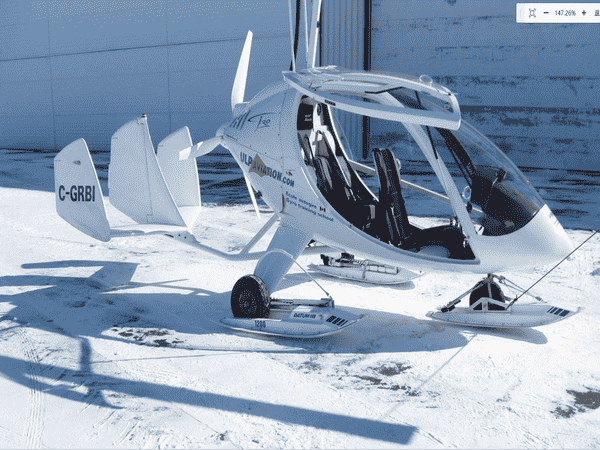
Yes. We build derived variants of our gyroplane aircraft for police and security work, tourism and experience flights, snow-region operation, night flight configurations and electric smart-aircraft development platforms.
Customization commonly covers personalized paint schemes, night lighting upgrades, extended fuel tank, instrument panel layout, electro-optical observation pod, drone radio link and other mission-specific mounting provisions.
Any custom gyroplane kits are documented on the configuration sheet before production. Structural changes, electrical load and mounting points are reviewed with our engineering team, and the test flight report reflects the final fitted state.
What materials go into our airframe and rotor?
The airframe balances carbon composite for light weight with steel and aluminum members where strength and load transfer matter. The cabin glazing uses aviation-grade organic glass. Rotor blades are aluminum alloy with a matched rotor head and trim safety assembly.
We keep an 8.6-meter autoclave plus cutting, curing, cold storage, laying-up, dust-free grinding and surface treatment facilities on site. This lets us control CFRP and GFRP part quality in-house rather than outsourcing critical structural components.
Material choice also affects maintenance. Composite panels are easy to inspect for surface damage, and the fewer transmission links in this autogyro design mean fewer moving parts to service compared with a powered rotor helicopter.
How do I choose the right configuration for my operation?
We usually start by asking four questions: what is the mission, what are the local flight rules, how many hours per year will it fly, and what payload or equipment must be carried.
For training and tourism, the standard gyroplane kits for this gyroplane aircraft with basic navigation and communication gear are usually sufficient. For patrol and inspection, buyers often add GPS navigation, transponder, headset pair and observation mounting provisions. For remote-area operation, fuel capacity, spare belt and tool selection become more relevant than panel upgrades.
Send us your mission brief and local regulatory notes. We will reply with a recommended configuration, the option list, and the lead time for that build rather than pushing every available extra.
Certification, Compliance and Registration FAQs
What certificates does our gyroplane aircraft hold?
The J-RO C-100 holds the Chinese civil aviation Type Certificate (TC) and Production Certificate (PC). It was the first fully enclosed gyroplane aircraft type certified by CAAC as a light sport aircraft in China.
It also carries airworthiness recognition for France, Germany, Canada and Nepal, and its design aligns with the US ASTM light sport aircraft standard. These documents travel with the gyroplane kits supplied to buyers as part of the export package.
Will the aircraft pass local registration in my country?
Registration rules differ by country, and we cannot make a binding guarantee for every jurisdiction. The responsible step is to check your local civil aviation authority requirements before signing.
We provide the gyroplane kits technical documentation, operation manuals, factory test records and certificate copies your authority will typically review. For countries where our gyroplane aircraft already has prior approval, we can note that recognition on the inquiry response.
If your local rules classify this autogyro under light sport, experimental or another category, share the relevant rule text with us. Our engineering team will map our existing documentation against those requirements and identify any gaps before you commit.
What documents do you provide for import and registration?
The standard export document package covers the gyroplane aircraft specification sheet, configuration list, test flight report, airworthiness certificate copies, engine and propeller documentation, operation and maintenance manuals, and packing and commercial documents needed for customs clearance.
For domestic Chinese buyers we can also support the three-document agency service. For overseas buyers, our sales team coordinates with your freight forwarder and supplies the paperwork your customs broker requests.
Can the gyroplane aircraft be adapted to a specific national standard?
Adaptation depends on what the standard asks for. Where the requirement is documentation, equipment fit or labeling, we review the rule against our current gyroplane kits and the gyroplane aircraft's certified design, then propose a documented change before production.
Where a national rule demands structural or airframe changes that fall outside our certified design, we flag the limitation early rather than promising a modification we cannot support. An honest scope note protects both sides after delivery.
Any agreed adaptation is recorded on the configuration sheet and reflected in the final test flight report, so the delivered gyroplane aircraft matches what was submitted to your authority.
How does the design meet ASTM light-sport standards?
The gyroplane aircraft was developed to meet light sport category expectations for structural load, controls, visibility and two-seat operation. The enclosed cabin, fixed tricycle undercarriage, rear pusher propeller and passive rotor layout follow the established autogyro configuration rather than an experimental one-off build.
Our production side is governed by the PC-approved process, with industrial standard production lines and inspection lines set up for scaled output. The buyer receives a serial-numbered unit with build records tied to that airframe.
Delivery, Shipping and Export FAQs
How long is the production and delivery lead time?
For a standard configuration gyroplane aircraft, the stated production cycle is about two months from contract and deposit confirmation. Custom paint, special mission equipment or derived variants may extend that schedule, and the lead time is confirmed on the order sheet.
The two-month figure covers production, assembly and factory test flight preparation. Shipping time, customs clearance and local assembly support are scheduled separately and depend on your destination and freight method.
How is the gyroplane aircraft packed and shipped overseas?
Each gyroplane aircraft is prepared for transport with protective covers on the fuselage, rotor blades, propeller, pitot tube and exhaust. Disassembled where required for container loading, the unit is packed with protective film and foam materials listed in the accessory packing record.
Standard export freight cost is quoted per destination and container method. We coordinate with your nominated forwarder or recommend options based on past shipments to your region.
Who handles assembly and test flight after delivery?
Our factory technical staff can travel to support assembly and the post-delivery check flight. The buyer covers the travel expenses of our technicians for this on-site service, as noted in our purchase terms.
Before travel, we send assembly documentation and tooling references. The included gyroplane kits ship with the rotor blade straightening kit and propeller angle tooling needed for reassembly of the autogyro after arrival. The final acceptance flight is recorded and reported back to the factory.
How do you support the first flight after handover?
Before release, each gyroplane aircraft completes a factory test flight covering engine run, controls, rotor operation, trim and instrument function. That qualified test flight report is the acceptance milestone under our payment terms.
After arrival, our technician supervises reassembly, inspection and the local check flight. Pilots new to this autogyro should complete proper training on controls, autorotation practice and pre-flight procedures before carrying passengers. We keep a channel open for post-handover questions on rigging, instrument reading and operation.
Which countries have you exported to already?
Our gyroplane aircraft and autogyro-related products have reached more than 40 countries and regions across Europe, Asia, Africa and the Americas. The J-RO series has been produced in batch and sold into the European market since 2019, and derived variants have been adopted for tourism, sports education and public safety use.
If you tell us your country, we can check whether there is prior shipment or local reference we can share, subject to customer confidentiality.
What payment terms apply to export orders?
Export orders follow a 70% deposit after contract signing, with the remaining balance paid within three working days after the factory issues the qualified test flight report. Domestic Chinese orders follow a 40% deposit against the same test flight report milestone.
Quotation validity is stated on each price sheet. Currency, Incoterms and freight responsibility are agreed in the sales contract so there are no hidden charges after the order is placed.
Maintenance, Support and Spare Parts FAQs
What routine maintenance does this gyroplane aircraft need?
Daily and scheduled checks on this autogyro follow the operation manual: pre-flight inspection of rotor blades, controls, tires, brakes, fuel and oil levels, and post-flight review of the airframe, propeller and fasteners.
Scheduled maintenance covers periodic inspection, rotor and control system checks, engine service intervals per the Rotax schedule, and replacement of wear items such as drive belts. Our after-sales team supports scheduled inspection, part replacement and airframe repair.
Because the rotor spins freely in flight rather than being engine-driven through a complex transmission, the mechanical chain that needs routine attention is shorter than on a powered helicopter.
How do you supply spare parts after the sale?
Original spare parts are supplied through the factory. Common wear items for our gyroplane kits, such as belts, fuses, filters, covers and seals, can be packed with the initial shipment or reordered in subsequent consignments.
Specialized airframe or rotor parts are produced on our production lines and shipped against the airframe serial number. We record the configuration of each delivered gyroplane aircraft so the correct part can be identified later.
For operators planning remote or frequent flying, we discuss an initial spare parts list before delivery so the first season of operation does not wait on international shipping for routine consumables.
What after-sales services does Tenchy provide?
Our after-sales scope covers the gyroplane aircraft, autogyro scheduled inspection, component replacement, airframe repair and original spare parts supply. We also maintain records for each delivered unit so service history stays attached to the airframe.
Beyond maintenance, we run training for pilots, maintenance technicians and skilled workers, backed by our aviation sports training school; for export fleets it can be arranged around your crew size and schedule. If a part issue arises, the serial number and configuration sheet let us trace the exact build state rather than guessing from a generic parts list.
What fuel and engine care should buyers plan for?
The engine in our gyroplane aircraft runs on regular 95 or 98 unleaded gasoline available at typical fuel stations, which keeps operating logistics simpler than aircraft requiring specialized avgas in many regions.
Typical consumption is around 15 liters per hour at cruise. Buyers should follow the Rotax maintenance schedule, monitor oil temperature, oil pressure and cylinder head temperature on the standard gauge set, and keep the fuel filtering funnel option in mind for field refueling where fuel quality may vary.
Price, Ownership Cost and ROI FAQs
How much does a gyroplane aircraft cost from the factory?
Pricing for the standard gyroplane kits starts at RMB 1,538,000 for the domestic configuration. The overseas standard configuration is listed at RMB 1,798,000, equivalent to about USD 248,097 at the quoted exchange rate.
Final pricing depends on the selected options, custom paint, shipping destination, installation of equipment such as the ADS-B transponder or Garmin 660, and any derived variant requirements. A firm quotation is prepared after we confirm your configuration and delivery terms.
What extra costs should an overseas buyer budget for?
Beyond the gyroplane aircraft and gyroplane kits price, budget for international freight, import duties and taxes in your country, insurance, optional equipment, any on-site technician travel, and local registration or certification fees.
Our purchase terms list typical domestic extras for reference: registration agency service, transport, annual insurance, custom paint starting price and on-site assembly support. For export orders each item is mapped to the applicable Incoterm so the total landed cost can be planned before commitment.
Why is buying direct from factory cheaper than through dealers?
Direct factory sale on a gyroplane aircraft and our factory gyroplane kits removes the intermediate resale margin. It also avoids the configuration mismatch that happens when a dealer holds stock built to another customer's specification.
You communicate directly with the production and engineering side, so changes, options and documentation stay aligned with the actual airframe. Spare parts and warranty support trace back to the original builder rather than a reseller chain.
What running cost can I expect per flight hour?
On this autogyro, running cost is driven mainly by fuel, engine service intervals, wear-item replacement and insurance. With about 15 L/h fuel burn and regular gasoline, fuel expense per hour is modest compared with turbine or helicopter platforms.
Maintenance cost depends on annual flight hours and operating environment. Hot, dusty or salt-air operations accelerate wear on filters, seals and paint, so we recommend a conservative reserve budget for those conditions. Your specific hourly cost estimate can be prepared once we know your annual utilization and climate.
Is there a financing or lease arrangement available?
In the domestic Chinese market, a gyroplane aircraft manufacturer financing model has been introduced and applied through our operations. For overseas buyers, financing options depend on local banks, export credit channels and lease providers in your region.
We can supply the specification, valuation support and documentation your financing partner requires. Whether a lease or installment arrangement is available to you is ultimately decided by the financial institution, not by the factory.
Internal Factory Insights: Lessons from Real Projects
What mistakes do first-time gyroplane buyers make?
One repeated mistake is over-specifying the gyroplane kits panel before understanding local airspace rules. A transponder or high-end GPS is useful where required, but it adds cost and installation time where the local rules do not demand it. We recommend confirming flight rules first, then matching the avionics.
Another common miss is underestimating spare parts for the first season. Operators ordering one aircraft for remote patrol sometimes run out of consumables before the first scheduled inspection. We now suggest a basic consumables list for the gyroplane kits at quotation stage.
Buyers also sometimes compare a gyroplane aircraft against a helicopter on hover capability. These platforms solve different problems. If hover and vertical lift are core to your mission, an autogyro design will not substitute, and we will say so early in the conversation.
What does our factory production process actually look like?
Inside the plant, the autogyro composite parts are laid up and cured in-house, structural members are assembled on the production line, rotor blades are matched and balanced, and the airframe moves through wiring, panel fit, engine installation and final inspection before test flight.
Each stage has a quality record tied to the airframe serial number. The factory test flight covers engine run, controls, rotor operation, trim and instrument function, and the qualified test flight report is the milestone that triggers final payment under our terms.
How we handle post-order change requests
Configuration changes to the gyroplane aircraft after production starts carry schedule and cost impact, so we freeze the configuration sheet before cutting materials. If a change is requested early enough, engineering reviews feasibility and updates the sheet in writing.
If the change reaches us after assembly has begun, we assess what parts are already fitted and quote the rework honestly rather than absorbing unplanned cost silently. This practice has reduced later disputes on repeat orders and is the reason we ask for mission details early.
Further Reading and Industry References
Beyond our own product pages, independent rotorcraft and light aviation associations publish background material that helps buyers understand the category, licensing context and operating expectations before they shortlist a platform.
For an external overview of rotary-wing light aircraft history, design categories and operator communities, you can review public reference resources focused on the gyroplane aircraft category maintained by rotorcraft associations in the United States, covering pilot guidance, builder information and regulatory context outside our factory documentation.
For broader light sport aircraft standards and operator education, the Experimental Aircraft Association publishes public guidance on light sport categories, training and ownership considerations that complement the specification data on this page.
If you are comparing our gyroplane kits against other global suppliers, treat independent association and standard-setting pages as background only; final airworthiness and registration decisions must follow your own civil aviation authority's current rules.
Contact Tenchy for Your Factory-Direct Gyroplane Aircraft
Whether you are a flight school, tourism operator, patrol unit, survey company or private owner, our team can prepare the gyroplane kits configuration sheet, quotation and delivery plan based on your mission and destination.
You can request a written specification and price list, arrange a factory audit, or book a live video walkthrough of the production line. Contact our sales team through our official website and email, with your country, mission type and intended annual flight hours, and we will respond with the recommended configuration and export terms.
Reference Links
Rotorcraft association reference for the gyroplane aircraft category in the United States.
Experimental Aircraft Association public resources on light sport aircraft guidance.