Previous
Next
Kit helicopter guide from a source factory 9 models compared, real build costs
Description
Kit Helicopter Guide 2026: 9 Models, Real Costs and Build Times Compared
A kit helicopter is the least expensive route into rotorcraft ownership, and in 2026 it is also the route with the widest spread of choices. Nine airframes are realistically buyable this year, three turbocharged engine families dominate supply, and the gap between the cheapest and the most expensive finished aircraft is wider than at any point in the last decade.
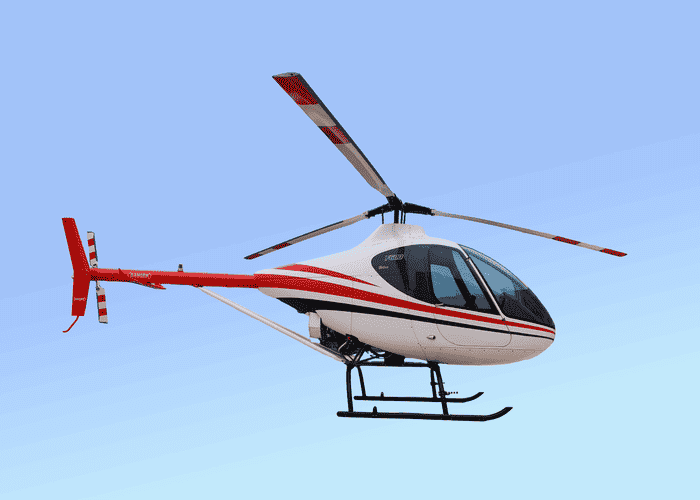
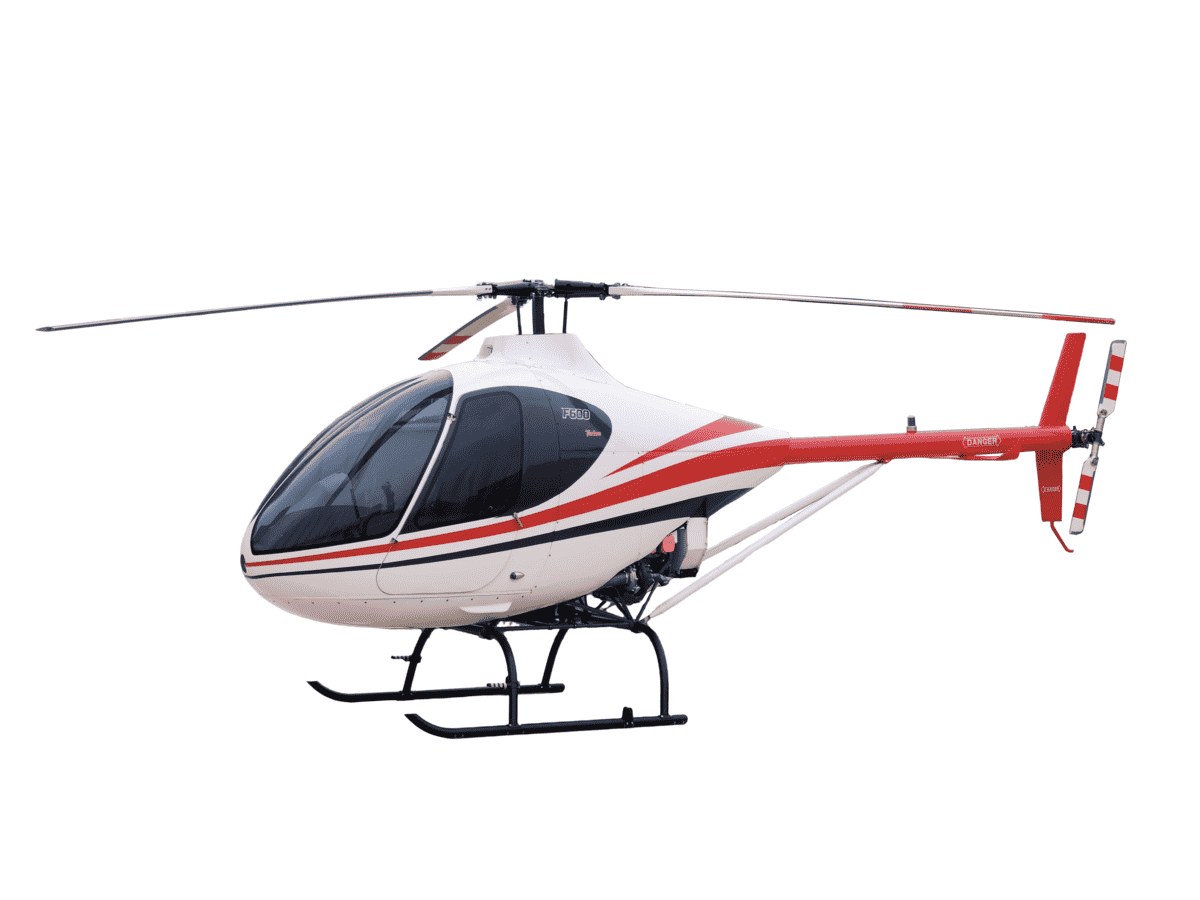
Everything below comes from a production floor rather than a marketing desk. Zhonglian Aviation Co Ltd builds kit airframes in Changzhou, runs every engine on its own test cell, and crates shipments for builders in more than thirty countries. What follows is what the order book shows, where first-time builders lose money, and how the Zhonglian F27 compares with the Safari kit helicopter that most Western buyers ask about first.
This is a source-factory document. We sell direct, we do not operate a dealer network, and we accept factory visits, live video walkthroughs and third-party pre-shipment inspection. Those claims are testable, and the rest of the page is written on that basis.
What Actually Comes in the Kit
It arrives as a set of matched subassemblies, not as a box of loose parts. The factory finishes the safety-critical work: rotor head, transmission, tail drive, primary structure and engine mount. The builder finishes assembly, plumbing, wiring, paint and paperwork. That split is what keeps a homebuilt rotorcraft affordable.
It is also the part buyers misread most often. A purchase is not a shopping transaction that ends at delivery. It starts a project with a defined finish line, and the quality of the manual and the parts list decides whether you reach that line in one year or three.
What ships inside the crate
A two-seat crate normally holds the fuselage structure, main rotor blades and hub, tail boom and drive shaft, gearboxes, flight controls, fuel tank, instrument panel blank, hardware kits and a build manual with torque schedules. Engine, avionics, interior and paint are separate line items.
Demand a numbered packing list before you wire a deposit. Crates without one are the most common cause of a stalled first build. We photograph every packing layer and email the images before the container is sealed, because a buyer who knows exactly what is inside stops guessing.
What the kit price does not cover
Engine, rotor balancing, avionics, interior, paint, freight, duty, registration and flight training all sit outside the kit invoice. Our 2026 planning figure is blunt: add 35 to 55 percent to the kit price to reach a flyable, registered aircraft. Any estimate below 30 percent is missing something.
What Our Order Book Shows About the 2026 Market
Orders have split into two clear groups this year. Cost-driven builders want four-cylinder turbocharged power and the lightest airframe that will do the job. Builders who fly long cross-countries want six or eight cylinders and more power margin than they think they need.
Engine choice now decides the airframe
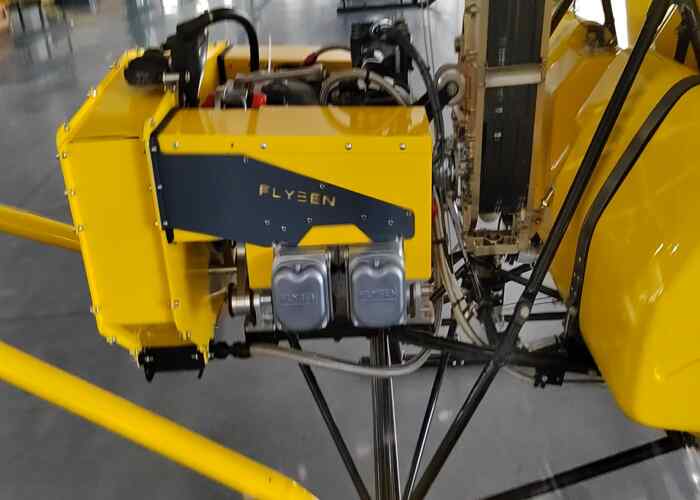
Three turbocharged flat engines cover most of what ships today. The FB160T produces 170 hp at 3300 rpm from 3520 cc and weighs 81.2 kg dry. The FB200T produces 250 hp at 3000 rpm from 5295 cc and weighs 107.9 kg.
The FB300T produces 350 hp at 3300 rpm from 7055 cc and weighs 153.6 kg. All three run 98 octane pump fuel or 100LL avgas, which matters wherever avgas is scarce or badly priced. All three use dual electronic ignition, electronic fuel injection, dual fuel pumps and forced lubrication in a wet sump.
One number builders underrate: compression ratio is 8.1 to 1 across the range and maximum operating altitude is 6500 m. Owners flying from high desert strips care about that ceiling far more than about peak horsepower printed at sea level.
Two builds from this season
A South African owner took an F27 airframe with the FB160T for coastal patrol work. His report after the first forty hours was a steady 150 km/h cruise and a fuel burn roughly half of what the local charter operator quoted per hour.
An Australian flight school chose the FB200T version for ab-initio training. Four months and 120 hours later the engine had not been off the airframe, and the only unplanned downtime was a starter solenoid replaced under warranty.
These are not performance claims. They are the pattern the shop floor sees: turbocharged automotive-derived power is dependable when the installation is right, and installation errors cause most of the failures that get blamed on the engine.
How we commission a new unit
Every engine runs on our test cell before it enters a crate: a break-in cycle, a full-power pull, fuel pressure at the regulator and an ignition timing check. The data sheet for that specific serial number travels with the aircraft, so the builder starts from measured values rather than from a generic graph.
Builders who followed our commissioning checklist reported no first-start surprises in the past two seasons. The checklist covers cooling airflow, oil temperature rise in the first hour, and the two wiring mistakes we see most often on amateur installations.
Zhonglian Helicopter and the Safari Kit Helicopter: Where They Actually Differ
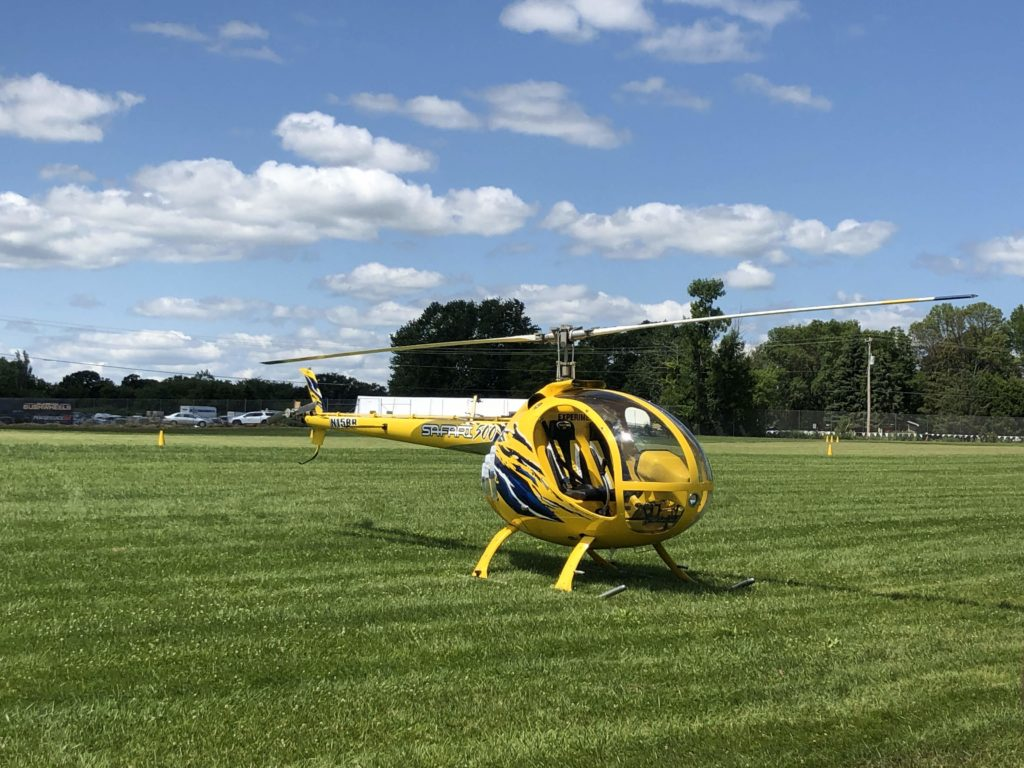
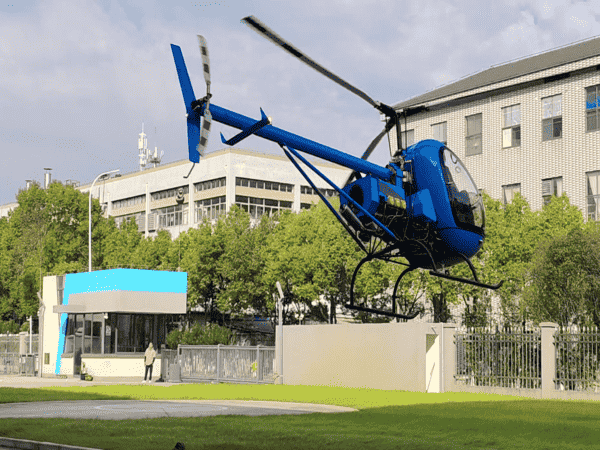
This question fills our inbox every week. Buyers compare the Zhonglian F27 with the Safari kit helicopter because both are two-seat experimental machines at a similar level of finish. They are built for different buyers and different missions.
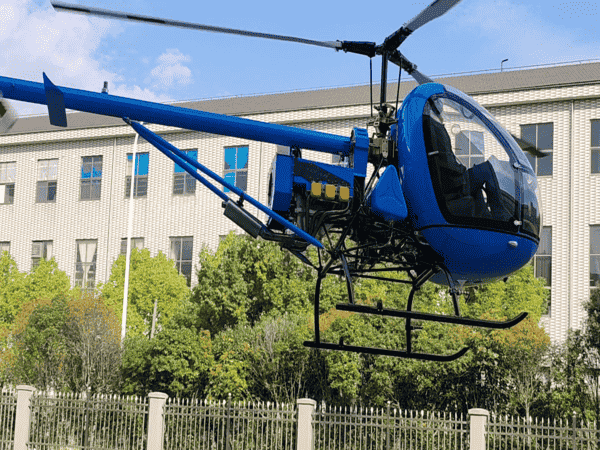
The short version: the Safari kit helicopter is heavier and slower, and carries more, around a certified Lycoming engine and a long-established North American builder community. The Zhonglian F27 is lighter, faster, longer-legged, and built around a turbocharged engine that runs on pump fuel.
Side-by-side comparison
Table 1 Zhonglian F27 and Safari kit helicopter: specification comparison, 2026 configuration
Item | Zhonglian F27 | Safari kit helicopter (Safari 400) |
Origin and lineage | Zhonglian Aviation Co Ltd, Changzhou, China; airframe developed in house | Canadian origin, now USA based; long-running amateur-built line |
Empty weight | 395 kg | approx. 431 kg |
Maximum take-off weight | 620 kg | approx. 726 kg |
Useful load | approx. 225 kg | approx. 295 kg |
Main rotor diameter | 6.84 m | 7.72 m |
Cruise speed | 150-160 km/h | approx. 137 km/h |
Maximum speed | 186 km/h | approx. 160 km/h |
Fuel capacity | 70 L | 106 L |
Endurance | approx. 2.5 h | approx. 2.5 h |
Range | approx. 550-600 km | approx. 430 km |
Service ceiling | 3000 m | 3000 m |
Engine | Flyben FB160T, 170 hp turbocharged; or FB200T, 250 hp | Lycoming O-360 or Superior XP360, 180 hp |
Fuel | 98 octane pump fuel or 100LL | 100LL avgas |
Seats | 2 | 2 |
Structure | Vacuum composite skins, bonded modular subassemblies | Welded steel tube frame, fabric covered |
Rotor and drive | Maintenance-light hub, elastomeric bearings | Conventional hub, tail rotor debris detector |
Assembly time | Shorter, factory-completed modules | approx. 500 h per manufacturer figure |
Registration route | Experimental or amateur-built under local authority | FAA amateur-built and equivalent national schemes |
What the numbers mean once you are airborne
Thirty-six kilograms of empty weight is not a rounding error. It is a passenger bag, or fifty litres of fuel, or a reserve you would otherwise not carry. On a 620 kg limit the F27 lifts 225 kg; the Safari kit helicopter lifts roughly 295 kg on a 726 kg limit.
Cruise speed separates them faster than any other line. 150 to 160 km/h against about 137 km/h is roughly forty minutes on a 400 km round trip, on every trip. For patrol, inspection and sightseeing work that difference pays for itself by the second month.
The Safari kit helicopter answers back with payload and hover margin. Two adults with full tanks, float equipment, or hot-day operations at altitude are exactly the missions where an extra 70 kg of useful load and a larger disc area earn their keep.
Structure explains the rest. Composite skins resist coastal salt and hangar condensation, and modular subassemblies keep assembly hours low. Welded tube and fabric is easier to repair in a rural workshop with hand tools. Neither is better in absolute terms, and we tell buyers that before they order.
Ownership, parts and resale
A Safari kit helicopter usually holds value well because the type is familiar to North American inspectors and buyers. That familiarity is worth real money at resale, and we say so plainly to customers who plan to sell in five years.
The F27 trades some of that recognition for lower running costs: pump fuel instead of avgas, lighter consumables, and parts shipped from the factory that built the airframe. Where a customer lives decides which of those two advantages matters more.
Parts lead time is the number to check before you sign. A Safari kit helicopter owner can usually source from a mature aftermarket within a week. An F27 owner deals with one factory, which is faster when the factory is responsive and slower when it is not. Ask any supplier for their ten most-replaced items and their lead times in writing.
Second owners ask a different question: what will this machine cost me in year six? A Safari kit helicopter with documented annual inspections sells faster than an equivalent airframe with an incomplete logbook, and the gap in asking price is usually wider than the gap in condition.
The honest answer we give buyers is that both machines hold value slowly when the paperwork is clean. A Safari kit helicopter buyer wants provenance and a continuous annual record; an F27 buyer wants a recent build with fresh test data. Prepare the file for the buyer you expect, not for the inspector you hope never arrives.
Which one we recommend, and when
If your mission is distance, coastal or pipeline patrol, or one aircraft doing many short sorties, we recommend the F27 for cruise speed, fuel flexibility and lower empty weight.
If your mission is training two adults with full tanks, float work, or a market where Lycoming service sits within a day's drive, the Safari kit helicopter is the calmer, better-supported choice.
If you are unsure, send us the four numbers that decide everything: seats needed, cruise distance, base elevation and registration country. Every honest recommendation follows from those, not from a brand preference. A Safari kit helicopter also suits the buyer who expects to sell within three years, because the buyer pool already exists.
The Mosquito Kit Helicopter: Still the Lightest Way In
The mosquito kit helicopter is the single-seat machine that put private rotorcraft within reach of ordinary budgets, and it still does. It remains the cheapest flying helicopter most individuals can own, and in our enquiry log it is the model first-time builders name most often.
Its limits come from the category, not from options. One seat, a small useful load, a compact tank, almost no baggage space, and a light rotor system that asks for discipline in gusty air. Buyers who accept that get an honest machine at an honest price.
Where the mosquito kit helicopter still wins outright is storage and logistics. It fits a normal garage, tows behind a small car, and can be built in a workspace most owners already have. No hangar lease, no crane, no forklift, no annual parking fee that costs more than the aircraft.
Price is the last separator. A mosquito kit helicopter entry package costs a fraction of either two-seater, and for an owner who flies thirty hours a year that fraction is the whole argument.
Where it stops working is equally clear. Two seats, cross-country legs, camera mounts, spray gear and passenger revenue all sit outside its design envelope. If your plan needs any of those, a mosquito kit helicopter will frustrate you within a single season.
Who the mosquito kit helicopter suits best
Three owners do well with it: the private pilot who flies alone at weekends, the farmer checking fences and water lines, and the operator who needs an aircraft that lives in a garage rather than a hangar. All three buy a mosquito kit helicopter for the same reason, which is fixed cost.
Three owners do badly: anyone carrying a passenger every flight, anyone working from a 400 m strip in one direction, and anyone who wants to invoice a client per flight hour. For them a mosquito kit helicopter is a compromise that starts cheap and stays limited.
After handling both categories, our view is that the mosquito kit helicopter teaches rotorcraft discipline faster than any two-seater, because it gives no margin for sloppiness. That is an argument for it as a first machine, not against it, and it is why we still point beginners toward the mosquito kit helicopter when their numbers are small.
Mosquito kit helicopter against a two-seat design
Put the two side by side and the difference is arithmetic. A mosquito kit helicopter carries one pilot and a light bag; a two-seat airframe carries two adults, full tanks and equipment. Neither number is wrong, but only one fits a given mission.
Build effort differs too. The mosquito kit helicopter is a smaller project with fewer systems, which suits an owner with one winter of free weekends. A two-seat composite airframe rewards the builder who has a proper workshop and 500 hours to spend.
Running cost completes the picture. The mosquito kit helicopter wins on fuel, hangar and insurance, and loses on payload and resale depth. Owners who fly forty hours a year rarely regret the smaller machine; owners who fly a hundred usually trade up within two seasons.
One practical note from warranty files: most mosquito kit helicopter issues we see are rotor-related rather than engine-related, and they trace back to storage. A rotor left in a damp shed for two seasons will not behave like the one balanced at build.
Choosing a Machine Without Regrets
Mission first, airframe second
Write the mission down before you open any brochure. Seats, typical leg length, base elevation, hangar size, and whether the aircraft earns money or only spends it. Five lines are enough, and they eliminate half the market immediately.
Then rank the trade-offs you cannot change later: empty weight, rotor diameter, engine family and registration route. Paint, avionics and interior can be revisited in year three; a 7.7 m rotor and a certified engine cannot. A mosquito kit helicopter is the exception, because almost every one of its trade-offs is fixed at purchase.
Ten questions to put in writing
Ask any supplier for written answers, not a phone call. We send the same list to our own buyers, because it saves both sides a week of email.
· Which parts are factory-completed and which are builder-completed?
· What is the weighed empty weight of this exact configuration, not the brochure figure?
· Which engine variants are approved for this airframe, and what does each change in weight and cooling?
· What is the written build-slot date, and what happens in the contract if it slips?
· Which registration category has this airframe already been accepted in?
· What spare parts ship with the kit, and what is the lead time on the ten most-replaced items?
· Can we inspect the factory, or appoint a third-party inspector at pre-shipment?
· What commissioning data is supplied for our specific engine serial number?
· Which documents arrive before the crate and which arrive after?
· Who answers technical questions at hour 60 of flight, and how quickly?
Any supplier who cannot answer these ten in writing is a risk, whatever the price on the quotation. This is the part of our own sales process we refuse to shorten.
What a Kit Helicopter Really Costs in 2026
The kit invoice is not the finished price
Budget in six lines, not one. The airframe kit is the base. Engine adds 25 to 30 percent. Avionics adds 8 to 12 percent. Paint and interior add 4 to 6 percent. Crating and freight add 6 to 10 percent. Duty, registration, tools and training absorb the remainder.
Ask for every line in writing. A single all-in figure hides the parts that arrive later as separate invoices, and those invoices are the ones that break a build budget halfway through.
Where builders overspend
Three patterns repeat. Uprating the engine just in case adds cost, weight and cooling problems nobody designed for. Copying a fixed-wing avionics panel into a helicopter adds wiring the builder cannot fault-find at midnight.
The third pattern is late specification changes. A change after the crate ships triggers rework, and rework is always slower and more expensive than it looks in the email thread.
The cheapest build we completed this year was also the fastest, because the buyer froze the specification at deposit and never reopened it. Freezing the specification is a budget decision, not an engineering one.
How an Airframe Moves From Jig to Crate
Five quality gates
Every machine passes five checkpoints before it is packed: jig alignment of the primary structure, torque verification on the rotor and drive train, static control travel, engine test cell data, and a final weight and balance record.
Each gate produces a signed sheet, and those sheets go into the crate. Buyers who later need to prove build quality to an inspector have a paper trail instead of a verbal promise.
Crating, freight and what arrives first
We crate in layers: structure on the base, blades in a separate cradle, small parts in tagged boxes keyed to the manual. Photographs of each layer are sent before the container closes, and the manual references those tags, so nothing arrives anonymous.
Documents are split deliberately. Invoices, packing lists and the export declaration travel with the freight; the build manual, torque schedules and engine data sheet are sent electronically the day the crate is booked, so the builder can start reading before the ship sails.
Factory Direct: What Changes When You Buy From the Builder
We sell as the manufacturer. No trading company sits between the buyer and the production line, and no dealer margin is buried in the quotation. Price, specification changes, spare parts and technical answers come from the people who bonded and rigged the airframe.
That matters most after delivery. A rotor tracking question at hour 60 reaches an engineer rather than a sales desk reading from a template, and a replacement part ships from the same stores that produced your machine.
A video walkthrough first, an on-site audit when you are ready
A live video tour covers the jig table, the rotor balancing bench, the engine test cell and the crates being packed that week. You see the floor as it is, including the untidy parts, because buyers who visit after a polished showroom tend to ask harder questions later.
On-site factory visits are booked in advance so we can schedule a build-slot review and a test run during your trip. Bring your registration questions; we will walk through what your national authority is likely to request, document by document.
We also welcome a third-party inspector appointed and paid by the buyer at pre-shipment. Source factory, direct sales, open floor: those three claims should be testable, and here they are.
Registration Paths: United States, Europe and the Rest
United States: the FAA amateur-built route
In the United States the aircraft is normally registered as amateur-built in the FAA experimental category, following the majority rule: the builder must perform the major portion of fabrication and assembly. Expect an inspection, operating limitations and a Phase I flight-test period before passengers are carried.
Plan the paperwork before the crate arrives. Registration, the airworthiness inspection request and the Phase I programme all have lead times, and they run in parallel with the build only if you start early.
Europe: national schemes, not one EASA rule
Europe has no single amateur-built permit. EASA governs certified aircraft and design approvals, while national authorities and associations handle amateur-built and microlight categories, with conditions that differ country by country.
Practical advice: speak to the national association before you choose the airframe, not after. A model that is routine in one country can demand extra documentation in another, and a paperwork path is far easier to plan around than to retrofit. A Safari kit helicopter build is usually the easier file in North America and the harder one in Asia.
Training, Insurance and the First Hundred Hours
Training decides more than the model does
A two-seat machine is a training platform as much as an aircraft. Thirty to forty hours with a helicopter instructor is the realistic entry point for a piston single, and unusual control systems deserve a type-specific briefing before the first solo circuit.
Budget the training before the avionics. Owners who spend the money on glass panels first and flying second are the ones who park the aircraft at hour twenty and never come back to it. Flight time in a Safari kit helicopter counts the same as flight time in anything else, which is the point.
Insurance in simple terms
Hull cover usually follows the declared build value, so keep receipts for every component. Liability cover depends on the registration category and on pilot hours. Amateur-built aircraft are insurable, but the first year is priced on the pilot, not on the airframe.
Two habits reduce the premium: documented build records with signed gate sheets, and a first-hundred-hours log that shows maintenance on schedule rather than after a failure. Insurers read those files far more closely than owners expect.
What Changed Since 2025
Three shifts are worth knowing before you order. Turbocharged engine supply improved, which cut the wait on four-cylinder units. Crating costs rose with freight rates, and that line now matters more than it did last year.
Demand for the Safari kit helicopter stayed steady, which keeps used examples firm and parts widely available. Mosquito kit helicopter enquiries rose in Europe, where garage storage and light-trailer rules make single-seat ownership practical.
Quotation behaviour changed too. More buyers now ask for the Safari kit helicopter price and the F27 price side by side before they choose an engine, while the mosquito kit helicopter is increasingly a first aircraft bought by owners who already keep a fixed-wing machine. Safari kit helicopter quotations now arrive as a full package more often than as an airframe-only number.
Build slots also tightened. A written slot date is now a negotiating point rather than a formality, and buyers who accept an approximate range are the ones who wait longest.
FAQ: The Questions Buyers Actually Search
What is a kit helicopter?
It is an aircraft supplied as subassemblies that the buyer completes and registers as an amateur-built or experimental machine. The factory delivers the rotor system, transmission, structure and manual; the builder finishes assembly, systems, paint and paperwork.
How much does a kit helicopter cost?
Airframe kits run from entry-level single-seat packages to two-seat composite machines. Plan on 35 to 55 percent above the kit price for engine, avionics, paint, freight, duty and registration. A realistic two-seat budget is a five-figure airframe plus a five-figure powerplant and systems package.
Is the Safari kit helicopter still available?
Yes. The Safari kit helicopter line remains in production in the United States and has an active builder community, which is one reason it appears in so many comparison threads. Parts and support come from the manufacturer and a long-established owner network.
Can a kit helicopter carry two adults?
Two-seat models can, within limits. Payload, fuel and density altitude have to be planned together. A 225 kg useful load carries two adults and modest fuel; a 295 kg useful load carries two adults, full tanks and equipment.
What engine does a kit helicopter use?
Two families dominate. Certified aircraft engines such as the Lycoming O-360 appear in established North American designs. Turbocharged automotive-derived engines appear in newer designs, including the Flyben FB160T, FB200T and FB300T, which run on 98 octane pump fuel or 100LL avgas.
How long does a typical build take?
Established two-seat designs quote around 500 build hours. Real elapsed time is usually 9 to 18 months for a first-time builder working weekends, and the delays come from parts, paint, paperwork and inspections rather than from assembly itself.
Is the mosquito kit helicopter safe?
It has a long service record inside the ultralight category, and safety depends on build quality, engine maintenance, rotor care and pilot discipline. Single-seat light helicopters are less forgiving in gusts, so training matters more than the model you choose. Every mosquito kit helicopter owner we have trained needed the same first lesson, which is wind assessment on the ground.
Can I register one in Europe?
Yes, through national amateur-built or microlight schemes rather than a single EASA approval. Requirements, inspection and permit conditions vary by country, so confirm the route with the national authority or association before ordering.
Do I need a licence to fly it?
In most countries, yes. Amateur-built and ultralight categories still require a licence or permit appropriate to the class, plus the flight-test and currency rules of your authority. Training cost belongs in the budget from day one.
Safari kit helicopter or the Zhonglian F27: which keeps its value better?
In North America the Safari kit helicopter usually resells faster because inspectors and buyers already know the type. In Asia, the Middle East and parts of Europe the F27 moves well because buyers value pump-fuel operation and factory-direct support. Value follows familiarity far more than it follows the specification sheet, and a Safari kit helicopter in a well-documented logbook proves that every season.
Can I buy directly from the factory?
Yes. We sell direct from the production line and welcome factory visits, live video tours and third-party pre-shipment inspection. There is no trading company or dealer layer between the buyer and the build team.
What is the lead time?
Airframes are scheduled in build slots, and lead time depends on specification, engine supply and crating. Ask for a written slot date rather than an approximate range, and confirm in the contract what happens if that slot slips.
What support comes after delivery?
A build manual with torque schedules, assembly photo sets, wiring and plumbing diagrams, engine test data for your specific unit, and direct access to the engineering team. Spare parts ship from the same stores that produced your kit.
Why do some projects never finish?
Nearly always the same three causes: an unfinished workspace, a specification that keeps changing, and paperwork started too late. Builders who lock those three before the crate lands finish, and the ones who do not usually sell a half-built airframe two winters later. A mosquito kit helicopter project is short enough that this trap rarely catches its builders.
Book a Factory Visit or a Video Tour
If you are comparing the Zhonglian F27 with the Safari kit helicopter, or weighing a mosquito kit helicopter as a first machine, send your mission profile: seats needed, cruise distance, base elevation, hangar space and registration country.
Buyers who compare the Safari kit helicopter and the mosquito kit helicopter usually discover the same thing in the end: the airframe is a small part of the decision, and the support around it is the large part.
We will reply with a configuration, a line-item budget and the next available build slot. Video tours run weekly, on-site visits are booked in advance, and inspection by your own third party is always welcome. If a mosquito kit helicopter is your shortlist, tell us and we will say plainly whether it fits your mission.
Further Reading and Official Sources
Primary sources worth reading before you commit to any design, and the links our own team sends when a buyer asks about rules:
For the regulatory side in the United States, the FAA amateur-built aircraft programme explains the majority rule, the inspection and the flight-test sequence in plain language.
For the European framework, start at EASA to see what is certified at European level and what is left to national authorities, then check the association in your own country.
For background on the wider kit helicopter category, its history and how different countries classify homebuilt aircraft, this reference page is a reasonable starting point.
In the United Kingdom, the Light Aircraft Association publishes the permit and inspection guidance that most British homebuilders follow.
If a document and a seller disagree, believe the document. Registration is the one part of a project that no factory can finish for you, and it is the part buyers underestimate most.